Author Profile · Fantasy & Science Fiction
Tad Williams
b. 1957 · American
Who is Tad Williams?
A San Jose polymath who has been, by his own accounting, a paperboy, shoe salesman, radio host and insurance agent, and who writes long the way other people breathe. Memory, Sorrow and Thorn (1988–93) took Tolkien's architecture and renovated it from within: the elves got a genocide grievance, the dark lord got a sympathetic backstory, the prophecy got weaponised against its believers — and a teenage George R. R. Martin-reader named the result as the thing that showed him epic fantasy could grow up (Martin has said as much, repeatedly). Otherland then did the same for virtual-reality SF across four volumes, and Tailchaser's Song had earlier done it for cats. The War of the Flowers, Shadowmarch and a return to Osten Ard followed; brevity never did.
Why they matter
The crucial bridge between Tolkien's epic and Martin's: Memory, Sorrow and Thorn is the acknowledged direct inspiration for A Song of Ice and Fire, and Otherland anticipated the metaverse novel by a generation. Modern epic fantasy's revisionist turn starts here.
Essential books — and where to start
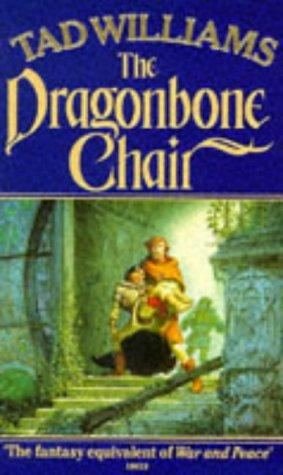
1988 · Memory, Sorrow and Thorn, book 1 · Fantasy · Epic Fantasy, Mythic Fantasy
Simon, a daydreaming scullion in the vast castle of the Hayholt, is apprenticed to the doctor Morgenes — scholar, secret historian and member of the League of the Scroll — just as good King John dies and his heir Elias accepts counsel from the priest Pryrates, who has been talking to something under the castle. The Storm King's bargain, the three Great Swords, and the flight north to the Norn-haunted wastes assemble with deliberate slowness (Williams's famous three-hundred-page fuse) into the epic that taught the next generation: the elves (Sithi) were here first and were wronged, the mad king has his reasons, and the prophecy is the trap.

1996 · Otherland, book 1 · Science Fiction · Cyberpunk, Portal Fantasy, Epic Fantasy
Children are falling into comas across the world, their minds trapped online; in South Africa, virtual-reality instructor Renie Sulaweyo loses her brother to the phenomenon and follows the trail — with the Bushman student !Xabbu — to Otherland: a private multiverse of impossible simulations (a Troy that bleeds, an endless kitchen, a cartoon world with teeth) built at unimaginable cost by the Grail Brotherhood, the world's oldest and richest men, for a purpose involving immortality and the children's stolen minds. Williams runs epic-fantasy architecture on SF rails: the quest is a login, the dungeons are server farms, and death may or may not be configurable.
Series
b. 1972 · American
The defining SFF writer of the 2010s: the unprecedented Hugo three-peat marked the genre's centre of gravity shifting — formally, demographically and thematically — and the Broken Earth is already canon, taught from secondary schools to doctoral seminars.
b. 1944 · American
The author whose success built the commercial epic fantasy category: Del Rey's Shannara experiment created the market that Jordan, Eddings and everyone since sold into.
b. 1959 · Canadian
The Malazan Book of the Fallen is epic fantasy's most ambitious completed structure — the genre's standing answer to the question of how big, how deep and how uncompromising the form can go and still find a mass readership.
