The City & the City
Hugo (tied), World Fantasy, Clarke and BSFA winner — a near-sweep — and the book that carried Miéville furthest into the literary mainstream; its 'unseeing' entered critical vocabulary as shorthand for trained urban blindness.

The essential authors of science fiction, fantasy & horror — and where to start reading them.
Book Entry · Fantasy
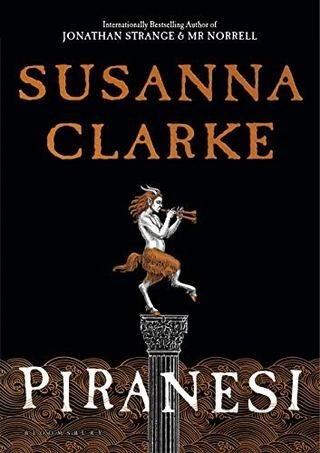
The House is the world: infinite halls of statues, an ocean moving through the lower floors, clouds in the upper, thirteen dead and two living — the narrator, who keeps meticulous journals and calls himself the Beloved Child of the House, and 'the Other', a well-dressed man who visits twice a week to pursue the Great and Secret Knowledge and warns him against a dangerous intruder called 16. The journals' earlier volumes, in a handwriting he recognises, mention impossible things: Manchester, a university, a name. Clarke builds the reveal with watchmaker patience, and the book's miracle is its temperature — a story of imprisonment that reads as a hymn to wonder. The Beauty of the House is immeasurable; its Kindness infinite.
Women's Prize winner and a pandemic-era phenomenon — the labyrinth book that arrived precisely when everyone was locked indoors — confirming Clarke's two-novel claim on the canon.
Prefer Amazon? Buying through these links may earn SFcrowsnest a small commission, at no extra cost to you.
Buy on Amazon UK → Buy on Amazon US →As an Amazon Associate, SFcrowsnest earns from qualifying purchases.
Hugo (tied), World Fantasy, Clarke and BSFA winner — a near-sweep — and the book that carried Miéville furthest into the literary mainstream; its 'unseeing' entered critical vocabulary as shorthand for trained urban blindness.
A cult masterpiece of visionary fiction, championed by writers from Lovecraft to Javier Marías, and a key influence on the dreamlike strand of the weird.
Winner of both the World Fantasy Award and the Bram Stoker Award for collection: the canonical one-volume Campbell and a standard text in any serious horror education.