Author Profile · Science Fiction
Stanisław Lem
1921–2006 · Polish
Who was Stanisław Lem?
A Lwów-born medical student who survived the Nazi occupation with false papers and emerged into Stalinist Poland, where science fiction proved an excellent place to think dangerous thoughts with plausible deniability. Lem became the most widely read SF writer in the world at his peak — translated into more than forty languages, tens of millions of copies — while maintaining, loudly, that most Western SF was trash (a position that got his honorary SFWA membership revoked, to the field's lasting embarrassment; Philip K. Dick, meanwhile, denounced him to the FBI as a possibly non-existent committee). His great theme is the limit of understanding: oceans that think, civilisations beyond translation, machines that out-reason their makers. Solaris is the masterpiece; the comic Cyberiad may be the greater miracle.
Why they matter
World SF's first undisputed giant outside the Anglosphere and the genre's most rigorous philosopher of the truly alien. Solaris stands as the permanent rebuke to first-contact stories where the alien is just a human in a suit.
Essential books — and where to start
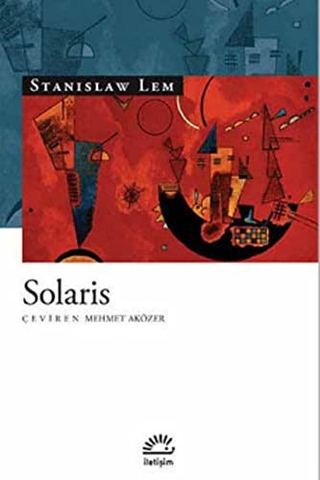
1961 · Science Fiction · First Contact, Hard SF, Literary SF
Psychologist Kris Kelvin arrives at the station hovering over Solaris — a planet-wide ocean that may be a single organism, studied for a century by a science ('Solaristics') that has produced libraries of taxonomy and no understanding whatsoever. The ocean has lately begun answering: each crew member receives a visitor distilled from his most guarded memories, and Kelvin wakes to find his wife Harey, ten years dead by suicide, asking why he's looking at her like that. Contact as mirror, grief as experiment design, and the great library chapter — science confessing its own circularity — at the centre. The alien remains alien; that is the point, and almost no one else has dared it since.
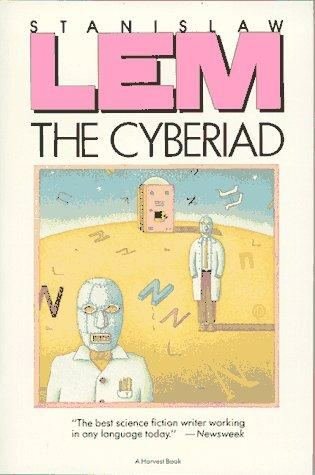
1965 · Science Fiction · Comic SF, Satirical SF
Trurl and Klapaucius, rival constructor-engineers in a universe populated almost entirely by robots, build machines to order for kings, pirates and their own vanity: a machine that composes poetry (after digesting the history of the universe), a miniature kingdom for a deposed tyrant that raises the ethics of simulated suffering decades early, a dragon-probability amplifier, and a machine that can create anything beginning with N — including, fatally, Nothing. Lem's cybernetic fairy tales run on wordplay that should be untranslatable; Michael Kandel's English rendering is itself a legendary feat. Philosophy of mind, computation and tyranny, disguised as the funniest robot folklore ever written.
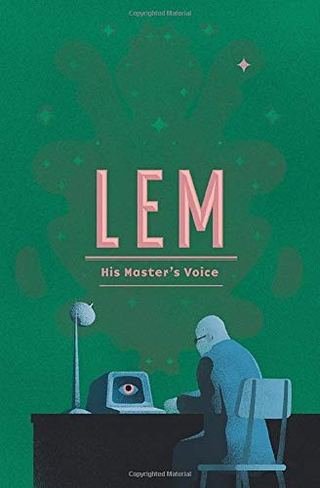
1968 · Science Fiction · First Contact, Hard SF, Literary SF
A neutrino stream from space proves to carry a signal, and the United States assembles its best minds in a desert installation — Manhattan Project protocols, Pentagon oversight — to decode the 'letter from the stars'. The narrator, misanthropic mathematician Peter Hogarth, reports the result with corrosive honesty: years of work yield a substance ('Frog Eggs'), a possible weapon, a terror, and no comprehension whatsoever, because every reading of the message is a mirror of the readers. Lem's most uncompromising novel: first contact as epistemological autopsy, with humanity's institutions — science included — as the specimens.
1925–2017 · British
The bridge between British SF's catastrophe tradition and the New Wave he helped detonate.
b. 1942 · American
The field's most rigorous builder of alien minds and interstellar economics.
b. 1967 · American
The most honoured short-fiction writer per page in genre history and the modern standard for conceptual rigour: proof that SF's core engine — the idea, followed honestly — still outperforms everything bolted around it.
