2001: A Space Odyssey
Half of the most influential SF artefact of the twentieth century.

The essential authors of science fiction, fantasy & horror — and where to start reading them.
Book Entry · Science Fiction
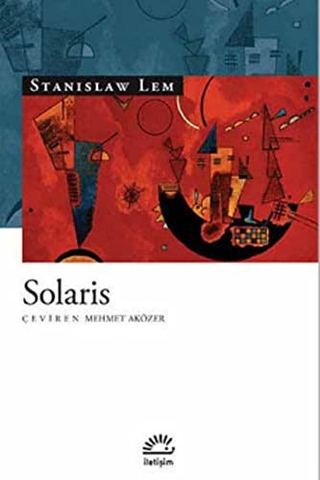
Psychologist Kris Kelvin arrives at the station hovering over Solaris — a planet-wide ocean that may be a single organism, studied for a century by a science ('Solaristics') that has produced libraries of taxonomy and no understanding whatsoever. The ocean has lately begun answering: each crew member receives a visitor distilled from his most guarded memories, and Kelvin wakes to find his wife Harey, ten years dead by suicide, asking why he's looking at her like that. Contact as mirror, grief as experiment design, and the great library chapter — science confessing its own circularity — at the centre. The alien remains alien; that is the point, and almost no one else has dared it since.
World SF's most filmed philosophical novel — Tarkovsky's 1972 masterpiece, Soderbergh's 2002 chamber version — and the standing refutation of anthropomorphic first contact. Lem disliked both films, naturally.
Prefer Amazon? Buying through these links may earn SFcrowsnest a small commission, at no extra cost to you.
Buy on Amazon UK → Buy on Amazon US →As an Amazon Associate, SFcrowsnest earns from qualifying purchases.
Half of the most influential SF artefact of the twentieth century.
Locus winner and a Hugo finalist; the hacker generation's foundational epic, credited with seeding real cypherpunk and cryptocurrency thinking, and gateway to his Baroque Cycle prequels.
Source of the Dark Forest hypothesis, now genuine currency in Fermi-paradox and existential-risk debates — the rare SF concept to cross into scientific discourse with its name attached.