Who was H. P. Lovecraft?
A reclusive Providence antiquarian who died poor and obscure at forty-six, having published only in pulps and amateur journals, and who now towers over horror like one of his own basalt monoliths. Lovecraft's great invention was a materialist cosmic dread: no devils, no salvation, just an indifferent universe of vast ancient intelligences beside which humanity is a temporary film on one minor planet. His circle of correspondents — Howard, Bloch, Smith and others — turned his Cthulhu mythology into the genre's first shared universe. His virulent racism is a matter of record and modern reckoning; writers from Jemisin to LaValle have built important work confronting it directly.
Why they matter
The defining figure of twentieth-century horror. Cosmic horror is his patent, the shared-universe mythos was his innovation, and his influence saturates fiction, films, games and the entire vocabulary of modern dread.
Essential books — and where to start
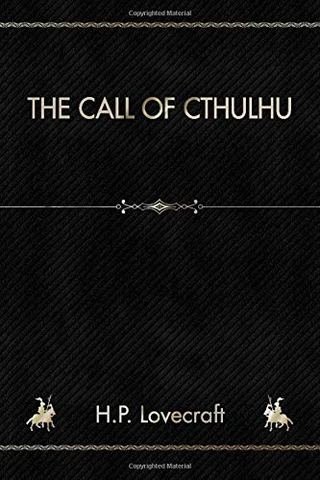
1928 · Horror · Cosmic Horror, Weird Fiction
Sorting a dead grand-uncle's papers, Francis Wayland Thurston assembles three apparently unrelated documents — a sculptor's fever-dreams, a police raid on a Louisiana swamp cult, a Norwegian sailor's log — into a single appalling picture: dead Cthulhu lies dreaming in sunken R'lyeh, and the stars are coming right. The story's structure is its genius: horror assembled by collation, the famous opening line warning that the inability to correlate the mind's contents is mercy. Published in Weird Tales in 1928, it is the keystone of everything later called the Cthulhu Mythos.
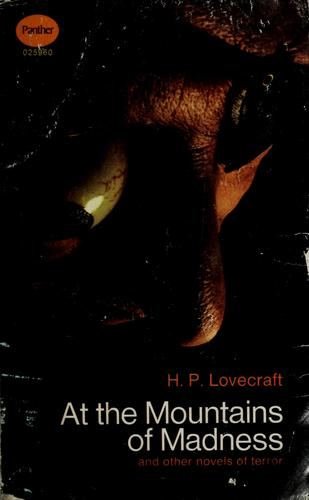
1936 · Horror · Cosmic Horror, Weird Fiction
A Miskatonic University expedition to Antarctica discovers a mountain range higher than the Himalayas and, beyond it, a cyclopean city millions of years old — the work of the Elder Things, who created earthly life as an experiment and were eventually overthrown by their own shapeless slave-organisms, the shoggoths. Lovecraft's longest work plays as scientific report sliding into terror, explicitly answering Poe's Arthur Gordon Pym, and its deep-time perspective — humanity as a footnote in someone else's laboratory notes — is cosmic horror's purest distillation.
1936 · Horror · Cosmic Horror, Weird Fiction, Folk Horror
A sightseeing student takes the cheap bus route through the decaying Massachusetts port of Innsmouth, where the locals have flat noses, unblinking eyes and an arrangement with things in the sea: the Deep Ones, immortal amphibian traders in gold and grandchildren. The night-time escape through the rotting town is Lovecraft's best sustained suspense sequence, and the final twist — the narrator's own ancestry surfacing like something rising through dark water — turns the horror inward. The only Mythos tale published as a book in his lifetime.
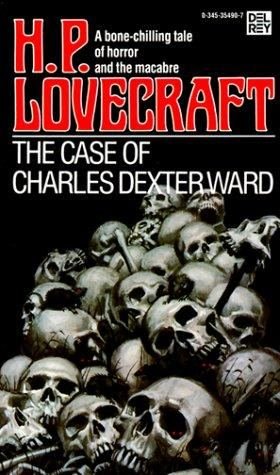
1941 · Horror · Cosmic Horror, Gothic Horror
A Providence antiquarian's obsession with his ancestor Joseph Curwen — necromancer, slaver and salt-merchant, who was never satisfactorily killed in 1771 — proceeds from research to resurrection, and young Ward is gradually replaced by the thing he raised. Written in 1927 but unpublished until after Lovecraft's death, it is his most novelistic work: a proper gothic mystery with detection (the admirable Dr Willett), grave-dust alchemy and the genre's best use of the formula 'do not call up that which you cannot put down'.
1869–1951 · British
The supreme master of nature-horror and a direct ancestor of cosmic horror: Blackwood demonstrated that the most profound terror comes from indifference and immensity, not fangs.
1917–1994 · American
The hinge between Lovecraft's cosmic age and the psychological thriller: Psycho founded the serial-killer genre, and Bloch's insight — that the scariest monster is the neighbour — became modern horror's operating premise.
b. 1946 · British
The bridge between Lovecraft's tradition and modern British unease, and the field's standard for sustained literary quality: multiple Grand Master and lifetime honours from every body that issues them, and an influence on literate horror that compounds by the decade.
