Who is Ramsey Campbell?
A Liverpudlian who sold his first Lovecraft pastiches to Arkham House at fifteen — August Derleth's editorial advice included relocating his imitation Massachusetts to England, the most productive note in horror history — and then spent six decades becoming the thing itself: the English language's most honoured living horror writer, by award count, and its most distinctive stylist. Campbell's territory is Liverpool and the Merseyside estates rendered in prose of sliding, paranoid precision, where the supernatural seeps through damp concrete and the human horrors (his childhood with a mentally ill mother is documented in his afterwords) need no assistance. The Doll Who Ate His Mother, The Face That Must Die and the stories of Alone with the Horrors mark the route; the productivity continues unabated.
Why they matter
The bridge between Lovecraft's tradition and modern British unease, and the field's standard for sustained literary quality: multiple Grand Master and lifetime honours from every body that issues them, and an influence on literate horror that compounds by the decade.
Essential books — and where to start
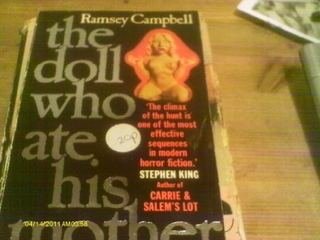
1976 · Horror · Psychological Horror, Supernatural Horror, Urban Fantasy
A car crash on a Liverpool flyover: Clare Frayn's brother is killed, and his severed arm is taken from the scene — eaten, the evidence eventually suggests — by a young man named Chris Kelly, raised under the influence of a dead occultist who promised his followers a child shaped into something new. Clare's amateur investigation, in company with a true-crime writer whose interest is not as clean as hers, descends through Liverpool's bombed-out churches and condemned terraces toward a cellar the book has been quietly building the whole time. Campbell's first fully realised novel: urban dereliction as occult geography.
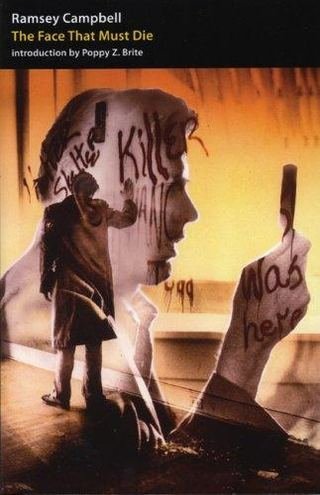
1979 · Horror · Psychological Horror
Horridge — unemployed, lame, scoured by resentment — knows things: he knows the plump man in the flats is the killer from the newspapers, knows the police are incompetent or complicit, knows his own deductions arrive with the force of revelation because they are true. Campbell locks the reader inside a paranoid schizophrenic's reasoning for an entire novel, every inference plausible from one step inside and appalling from one step outside, while Liverpool's grey estates supply a world mean enough to half-justify him. Published complete only in 1983 (the 1979 edition was cut), with an autobiographical introduction about Campbell's mother that reframes the whole book as an act of terrible empathy.
1993 · Horror · Weird Fiction, Cosmic Horror, Psychological Horror
The retrospective: thirty-nine stories from 1961 to 1991, charting the whole arc from teenage Lovecraft pastiche ('The Room in the Castle') to the mature Campbell of 'The Companion' (a fairground story Stephen King has called one of the best horror tales of the century), 'Mackintosh Willy', 'The Chimney' and 'In the Bag'. The collected evidence shows the constants: childhood fear handled without sentimentality, the supernatural arriving through misperception's side door, and prose in which every sentence seems to be glancing over its shoulder. The single-volume case for Campbell as the finest living writer of the short horror story.
1917–1994 · American
The hinge between Lovecraft's cosmic age and the psychological thriller: Psycho founded the serial-killer genre, and Bloch's insight — that the scariest monster is the neighbour — became modern horror's operating premise.
b. 1952 · British
The most original British horror voice of his generation: Barker rewired the genre's relationship with the body and desire, founded the dark-fantasy register a generation now writes in, and gave horror cinema one of its enduring mythologies.
1869–1951 · British
The supreme master of nature-horror and a direct ancestor of cosmic horror: Blackwood demonstrated that the most profound terror comes from indifference and immensity, not fangs.
