Author Profile · Horror & Fantasy
Clive Barker
b. 1952 · British
Who is Clive Barker?
A Liverpool playwright and illustrator who detonated under 1980s horror with the six Books of Blood — stories of such transgressive invention that Stephen King issued the most quoted blurb in the genre's history: 'I have seen the future of horror, and his name is Clive Barker.' Where the field's tradition punished the flesh, Barker eroticised its transformation: his monsters seduce, his hells have aesthetics, and his Cenobites — explorers, not torturers, by their own account — made The Hellbound Heart and his own film of it, Hellraiser, permanent fixtures of the culture. The pivot to dark fantasy (Weaveworld, Imajica, the YA Abarat, painted as well as written) revealed the same engine running at mythopoeic scale: desire as the door, and every door opening both ways.
Why they matter
The most original British horror voice of his generation: Barker rewired the genre's relationship with the body and desire, founded the dark-fantasy register a generation now writes in, and gave horror cinema one of its enduring mythologies.
Essential books — and where to start
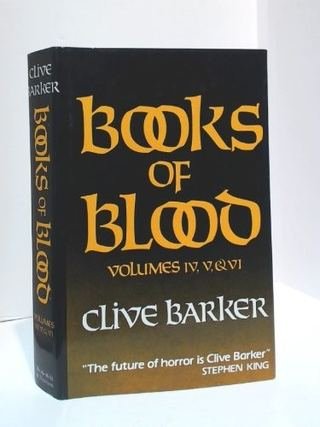
1984 · Horror · Body Horror & Splatterpunk, Weird Fiction, Dark Fantasy
Six volumes (1984–85) that rewired horror's possibilities in one go: 'The Midnight Meat Train' (a Manhattan abattoir line serving the city's true fathers), 'In the Hills, the Cities' (two Yugoslav towns assembling themselves into striding giants — the great single image of 1980s horror), 'Rawhead Rex' (a pre-Christian appetite in a Kentish field), 'The Forbidden' (urban legend as participatory faith, filmed as Candyman), and the framing conceit of stories carved into a fraudulent medium's skin. Barker's monsters desire and are desired; the transgression is the attraction. 'Everybody is a book of blood; wherever we're opened, we're red.'

1986 · Horror · Body Horror & Splatterpunk, Supernatural Horror, Dark Fantasy
Frank Cotton, a jaded sensualist who has exhausted every ordinary pleasure, solves the Lemarchand Configuration — a puzzle box advertised as a door to ultimate experience — and is collected by the Cenobites, 'theologians of the Order of the Gash', for whom pleasure and pain stopped being distinguishable categories aeons ago. What escapes back into an upstairs room of a suburban house is barely Frank; restoring him requires blood, which his sister-in-law and former lover Julia is persuaded to supply, husband by proxy. A novella of perfect economy: desire as contract law, with the small print enforced.
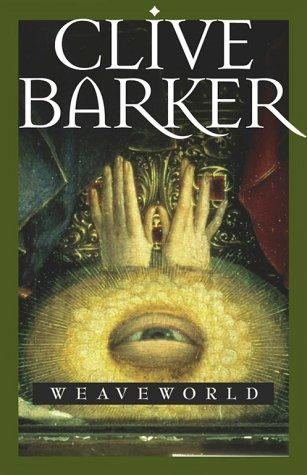
1987 · Fantasy · Dark Fantasy, Urban Fantasy, Portal Fantasy
The Seerkind — magic-working people hunted near to extinction by humanity and by something worse, the Scourge — wove themselves and their places into a carpet for safekeeping, with human Custodians to guard it. The last Custodian dies in Liverpool, and the carpet enters probate: pursued by the exiled Seerkind witch Immacolata and her salesman ally Shadwell (whose jacket lining shows each buyer their heart's desire), defended by pigeon-fancier's son Cal Mooney and Suzanna Parrish, who unravel one corner and fall through. Barker's first full pivot from horror to epic fantasy keeps the horror toolkit — the Scourge's identity is a genuinely awesome reveal — while arguing his lifelong thesis: wonder is real, and forgetting it is the Fall.
b. 1960 · British
The defining mythic fantasist of his generation: Sandman legitimised comics as literature, American Gods codified the gods-among-us novel, and his fairy-tale register shaped two decades of fantasy, YA and screen storytelling.
b. 1972 · British
The central figure of the New Weird and the most formally restless major fantasist of his generation: Miéville re-opened the weird tradition for the twenty-first century and made genre hybridity itself a respectable literary project.
b. 1946 · British
The bridge between Lovecraft's tradition and modern British unease, and the field's standard for sustained literary quality: multiple Grand Master and lifetime honours from every body that issues them, and an influence on literate horror that compounds by the decade.
