Who was Peter Straub?
A Milwaukee academic's son, hit by a car at seven — an event he spent a career metabolising — who began as a poet and mainstream novelist in Dublin and London before Ghost Story (1979) made him horror's reigning stylist. Straub wrote the genre with the full toolkit of literary modernism: nested narrators, unreliable memory, jazz, the Vietnam war, and evil as something that arrives wearing the face of an old guilt. Koko and the Blue Rose books fused horror with the crime novel; The Talisman and Black House, co-written with his close friend Stephen King, fused his sensibility with the field's biggest engine. Multiple World Fantasy and Stoker awards acknowledged what writers already knew: he was the craftsman's craftsman.
Why they matter
The writer who held horror to literary standard during its boom decades: Ghost Story is the modern summit of the form it names, and his King collaborations bridged the genre's commercial and literary wings in one bloodline.
Essential books — and where to start
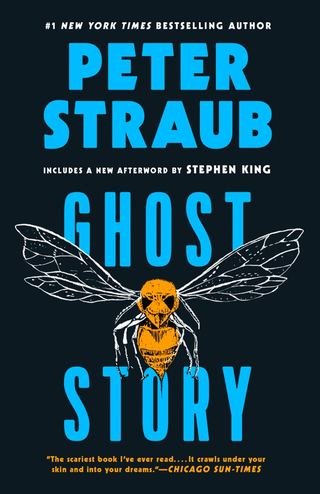
1979 · Horror · Ghost Story, Psychological Horror, Supernatural Horror
The Chowder Society — four old men in snowbound Milburn, New York — meet to tell ghost stories and not to discuss the thing they did in 1929, the dead woman who was not quite a woman and did not quite die. Now their members are dying of dreams, the snow is closing the roads, and what calls itself Alma Mobley or Eva Galli — a shapeshifting intelligence older than any name — has come back to finish the town. Straub builds the book as a hall of nested narratives (the title is a manifesto: every great ghost story is retold here, Hawthorne and James included) and closes it like a vice. The benchmark literary horror novel of its era.
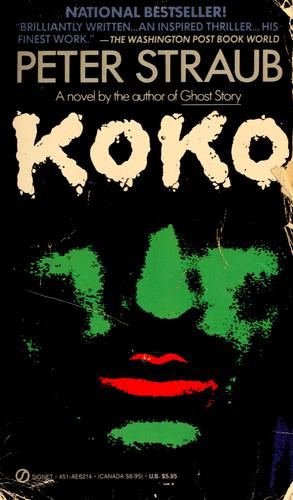
1988 · Horror · Psychological Horror, Literary SF
Four veterans of a Vietnam platoon reunite at the Memorial's dedication and compare letters: across South-East Asia, bodies are surfacing with regimental cards in their mouths reading KOKO, and the dead men's itineraries point to someone from their unit — someone shaped by what happened at the village of Ia Thuc, the atrocity the novel circles with documentary patience. The hunt runs from Washington to Singapore and Bangkok to Manhattan's West Side, but Straub's real territory is memory itself: every man's account of Ia Thuc differs, and the killer's interior chapters are among horror's most disquieting writing without a single supernatural element. The first Blue Rose book, and the deepest.
1920–2012 · American
The writer who proved science fiction could be literature without apologising.
1916–1965 · American
The author of the finest haunted-house novel in the language and the great demonstration that horror's true engine is psychology: Hill House and 'The Lottery' are permanent fixtures of the canon and the curriculum alike.
b. 1947 · American
Simply the most important horror writer who has ever lived, by reach: King made the genre a mass medium, trained generations of readers and writers, and his best books — The Shining, The Stand, It — are American literature wearing horror's jacket.
