Who was Shirley Jackson?
A faculty wife in North Bennington, Vermont, who raised four children, wrote cheerful domestic memoirs for the women's magazines, and meanwhile produced the most unnerving American fiction of her century. 'The Lottery' (1948) drew the largest volume of hate mail The New Yorker had ever received — readers wanting to know where these lotteries were held, and whether they could watch. Her novels perfected horror as psychology: houses that are not sane, sisters in protective isolation, villages whose ordinary cruelty needs no supernatural assistance whatsoever. Agoraphobic and anxious in her last years, dead at forty-eight, she has since been canonised as completely as any writer in the genre, with an award named for her and her influence — King, Hill, Machado, Flanagan — compounding annually.
Why they matter
The author of the finest haunted-house novel in the language and the great demonstration that horror's true engine is psychology: Hill House and 'The Lottery' are permanent fixtures of the canon and the curriculum alike.
Essential books — and where to start
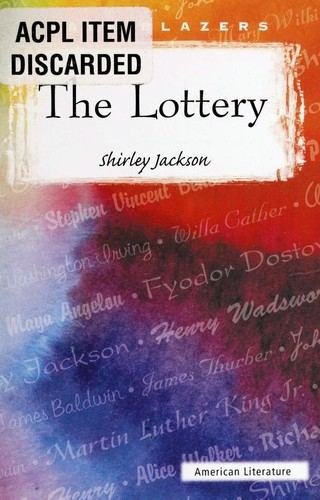
1948 · Horror · Psychological Horror, Folk Horror
A short story, and the genre's most famous one: on a sunny June morning, a village of three hundred gathers for its annual lottery — children stockpiling stones, men talking crops, Mr Summers with his black box of slips. Jackson narrates the administrative details with civic blandness for nine-tenths of the length, and the reader assembles the ending one beat before Tessie Hutchinson does ('It isn't fair, it isn't right'). Published in The New Yorker in 1948 to an avalanche of cancelled subscriptions and disturbed letters, it remains the standard demonstration of horror by implication: the scariest sentence in it is about the weather.
1959 · Horror · Ghost Story, Psychological Horror, Gothic Horror
'No live organism can continue for long to exist sanely under conditions of absolute reality' — the most celebrated opening paragraph in horror introduces Hill House, not sane, holding darkness within. Dr Montague's paranormal house-party assembles four guests; the house concentrates on Eleanor Vance, thirty-two, fresh from eleven years nursing her dying mother, desperate to belong anywhere. The phenomena — the pounding doors, the writing on the wall (HELP ELEANOR COME HOME) — are never separable from Eleanor's dissolving boundaries, and the question of whether the house is haunting her or completing her is the book. Whose hand was she holding?
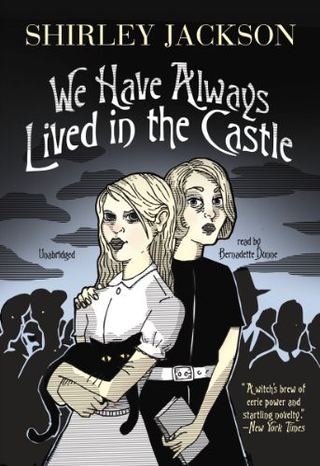
1962 · Horror · Psychological Horror, Gothic Horror
Mary Katherine 'Merricat' Blackwood — eighteen, feral, given to sympathetic magic and the wish that everyone in the village were dead — lives with her agoraphobic sister Constance and ailing Uncle Julian in the family house, the rest of the Blackwoods having died six years earlier of arsenic in the sugar bowl. Constance was acquitted; the village has not acquitted anyone. Cousin Charles arrives with his eye on the safe, and Merricat takes measures. Jackson's last completed novel is her most perfect: a fairy tale told from inside the witch's cottage, with one of fiction's great unreliable narrators keeping house at the centre.
1809–1849 · American
The wellspring of psychological horror and the modern short story of dread.
1943–2022 · American
The writer who held horror to literary standard during its boom decades: Ghost Story is the modern summit of the form it names, and his King collaborations bridged the genre's commercial and literary wings in one bloodline.
1869–1951 · British
The supreme master of nature-horror and a direct ancestor of cosmic horror: Blackwood demonstrated that the most profound terror comes from indifference and immensity, not fangs.
