Neutron Star
Hugo winner for the title story and the model hard-SF collection: the puzzle-story template (universe as antagonist, physics as plot) that defined the subgenre for a generation.

The essential authors of science fiction, fantasy & horror — and where to start reading them.
Book Entry · Science Fiction
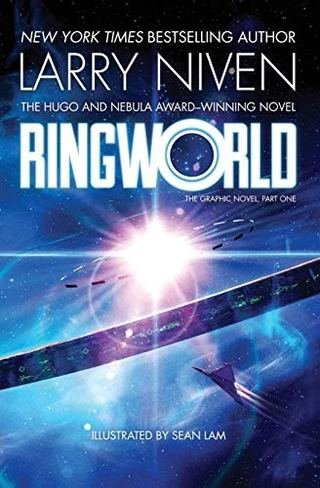
Louis Wu, two hundred years old and bored, is recruited by a Puppeteer — alarming in itself, since Puppeteers don't take risks — alongside a Kzinti warrior and Teela Brown, a human bred (the Puppeteers believe) for luck. Their destination: an artefact circling a distant star, a ribbon-world with the surface area of three million Earths, engineered by parties unknown and now sliding into barbarism. The expedition crashes, and the book becomes a traverse of the impossible: thousand-mile shadow squares, sunflower defence fields, and the slow dawning of what the Ringworld's builders fled.
Hugo, Nebula and Locus winner; the genre's definitive megastructure, inspiring physics papers, the Halo franchise and fifty years of Big Dumb Object fiction.
Niven's engineered future history: Puppeteers, Kzinti, organ banks, Ringworld and a thousand years of humanity expanding into a universe full of other people's leftovers.
In the Guide from Known Space:
Prefer Amazon? Buying through these links may earn SFcrowsnest a small commission, at no extra cost to you.
Buy on Amazon UK → Buy on Amazon US →As an Amazon Associate, SFcrowsnest earns from qualifying purchases.
Hugo winner for the title story and the model hard-SF collection: the puzzle-story template (universe as antagonist, physics as plot) that defined the subgenre for a generation.
Source of the Dark Forest hypothesis, now genuine currency in Fermi-paradox and existential-risk debates — the rare SF concept to cross into scientific discourse with its name attached.
With Judas Unchained, Hamilton's most acclaimed work: the Primes are a first-contact nightmare ranked with the Moties, and the Commonwealth became the template for post-scarcity-with-trains worldbuilding.