Author Profile · Science Fiction
Kim Stanley Robinson
b. 1952 · American
Who is Kim Stanley Robinson?
A Californian with a doctorate on Philip K. Dick (supervised by Fredric Jameson, which explains a lot) who became the genre's great novelist of work: terraforming as committee meetings, revolution as infrastructure, science itself as the protagonist. The Mars trilogy remains SF's most complete account of building a society from bedrock up — areology, constitutional conventions, and the hundred-year argument between preserving Mars and making it breathe. Since then he has rewritten world history without Europe (The Years of Rice and Salt), drowned and refloated New York, and in The Ministry for the Future produced the rare novel that ministers and central bankers actually cite. Utopian by discipline rather than temperament; he regards despair as a failure of rigour.
Why they matter
The standard-bearer for utopian hard SF and the writer who made climate fiction a serious policy conversation. The Mars books are the benchmark for planetary engineering narratives, and his insistence that economics is a branch of SF worldbuilding has reshaped the field.
Essential books — and where to start
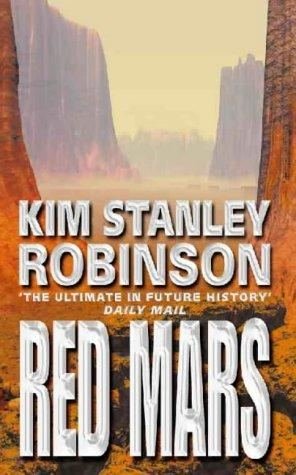
1992 · The Mars Trilogy, book 1 · Science Fiction · Hard SF, Social SF, Climate Fiction
The First Hundred — fifty Russians, fifty Americans, give or take a stowaway — land in 2027 to build the permanent settlement, and immediately begin the argument that will outlast them all: terraform, or preserve? Robinson follows the founders across decades as underground cities rise, a space elevator falls (wrapping the planet like a cheese-wire, in one of SF's great catastrophe set-pieces), Earth's transnationals export their oligarchy, and the first revolution fails bloodily. Geology, psychology and politics given equal weight; the red planet rendered so concretely you can taste the fines in your teeth.
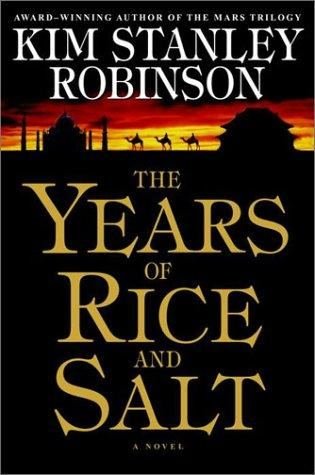
2002 · Science Fiction · Alternate History, Social SF
The Black Death kills ninety-nine per cent of Europe instead of a third, and world history proceeds without Christendom: Islam and China divide the globe, the scientific revolution arrives via Samarkand, the New World is settled from the west, and the long wars and liberations play out under other names. Robinson threads seven centuries through a jati of souls — the fierce one, the questioner, the steady one — reborn era after era and reunited in the bardo between lives to compare notes and file complaints with the management. Alternate history at civilisational scale, with reincarnation as the narrative spine.
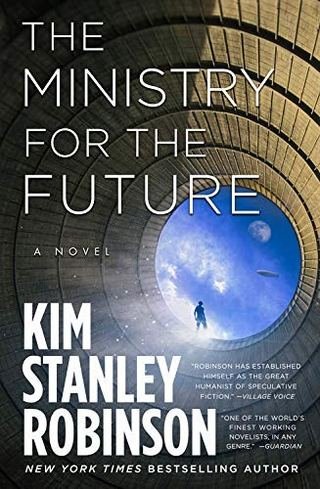
2020 · Science Fiction · Climate Fiction, Social SF, Hard SF
It opens with the scene the field cannot forget: a heatwave in Uttar Pradesh that kills twenty million people in a week, witnessed by an aid worker who survives in a lake of the dying. The novel that follows is barely a novel and entirely on purpose — minutes, eyewitness fragments, riddles spoken by the market and the photon — tracking the Zurich-based Ministry as it bends central banks toward a carbon coin, while unattributed eco-sabotage grounds the airlines. Robinson's wager is that the next thirty years can be narrated as if we cope, and that hope is a technical specification rather than a mood.
Series
1920–1992 · American (Russian-born)
One of the Big Three of Golden Age SF.
b. 1957 · British
The keeper of British SF's cosmological flame: the bridge from Wells, Stapledon and Clarke to the modern field, and the standard for fiction in which the universe's full history is the stage.
b. 1967 · American
The most honoured short-fiction writer per page in genre history and the modern standard for conceptual rigour: proof that SF's core engine — the idea, followed honestly — still outperforms everything bolted around it.
