Author Profile · Science Fiction
Isaac Asimov
1920–1992 · American (Russian-born)
Who was Isaac Asimov?
Brooklyn candy-store kid, Columbia biochemist, and the most relentlessly prolific intellect the genre ever produced: north of five hundred books bearing his name, covering everything from the Bible to limericks, with science fiction merely the most famous department. As one of John W. Campbell's key Golden Age writers he gave the field its two great load-bearing structures — the Three Laws of Robotics, which turned robot stories from Frankenstein retreads into logic puzzles, and psychohistory, the dream that mass human behaviour might be mathematics. His prose was plain by design; the ideas did the dazzling, usually in rooms where people simply talk to each other.
Why they matter
One of the Big Three of Golden Age SF. The Three Laws and the Foundation framework remain the genre's most borrowed furniture, and his vision of rational problem-solving as heroism defined an entire era of science fiction.
Essential books — and where to start
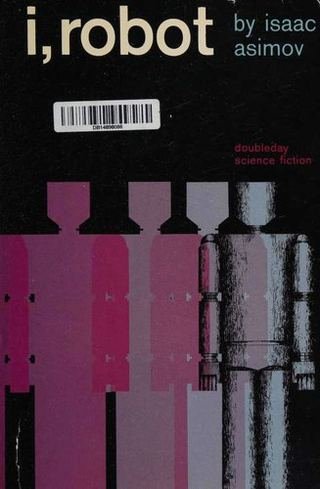
1950 · Robot series · Science Fiction · Golden Age SF, Hard SF
Nine linked stories, framed as the reminiscences of robopsychologist Dr Susan Calvin, charting robotics from a mute nursemaid called Robbie to machines quietly running the world economy. Each story is a logic puzzle in which the Three Laws of Robotics — no harm to humans, obedience, self-preservation, in that order — collide with circumstances and produce behaviour that looks like madness until someone reasons it through. Calvin herself, brilliant and unsentimental, is the collection's steel spine. The 2004 Will Smith film borrowed the title and little else.
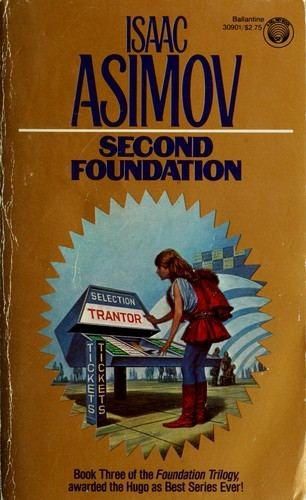
1951 · Foundation series, book 1 · Science Fiction · Golden Age SF, Space Opera, Social SF
Mathematician Hari Seldon's new science of psychohistory predicts the Galactic Empire's fall and thirty thousand years of barbarism — unless a Foundation of encyclopaedists, planted on the rim-world Terminus, can compress the dark age to a single millennium. The linked stories (from 1940s Astounding) skip decades at a time as Terminus survives successive 'Seldon crises' through trade, religion-as-marketing and the iron rule that violence is the last refuge of the incompetent. History as chess problem, and compulsively readable seventy years on.
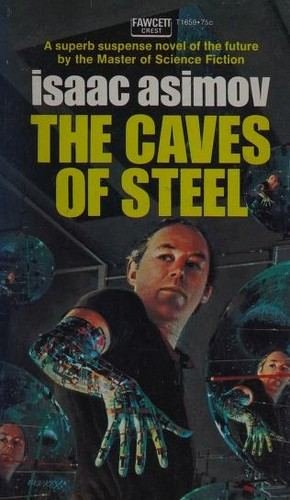
1954 · Robot series, book 1 · Science Fiction · Golden Age SF, Social SF
In an overpopulated future where Earth's billions live in vast enclosed Cities and fear the open sky, detective Elijah Baley is assigned a politically explosive murder case — and a partner he despises on principle: R. Daneel Olivaw, a robot indistinguishable from a man. Asimov wrote it to prove to Campbell that SF and the detective story could fuse without cheating, and the result plays scrupulously fair while smuggling in a study of prejudice, agoraphobia and two kinds of mind learning to respect each other.
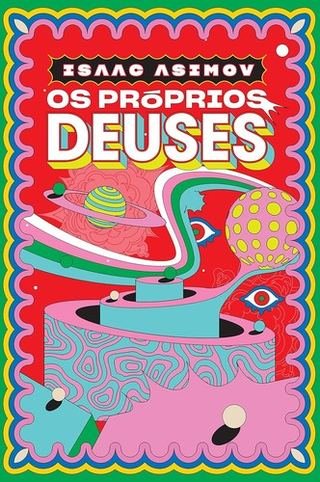
1972 · Science Fiction · Hard SF, First Contact
The Electron Pump delivers free energy by swapping matter with a parallel universe whose physics differ from ours — and almost nobody wants to hear the evidence that it will eventually detonate the Sun, because the energy is free. The dazzling middle section, set in the para-universe itself, follows a triad of soft-bodied aliens (Rational, Emotional, Parental) through the genre's most convincingly alien love story. Asimov wrote it partly to answer critics who said he couldn't do aliens or sex; he answered with both at once.
Series
1907–1988 · American
The first SF writer to crack the big general-fiction magazines and bestseller lists, and the genre's most influential craftsman.
b. 1967 · American
The most honoured short-fiction writer per page in genre history and the modern standard for conceptual rigour: proof that SF's core engine — the idea, followed honestly — still outperforms everything bolted around it.
b. 1943 · American
The essential counterweight to Starship Troopers and the writer who made military SF a literature of consequence rather than recruitment.
