Author Profile · Fantasy & Science Fiction & Horror
China Miéville
b. 1972 · British
Who is China Miéville?
A London Marxist academic (PhD from the LSE on international law, once a parliamentary candidate) with a shaven head, a stack of earrings and the stated ambition to write a novel in every genre. New Crobuzon — the rotting, magnificent city-state of Perdido Street Station, with its insect-headed khepri, cactus-people, Remade convicts and squid-worshipping crime lords — made him the figurehead of the New Weird: fantasy with the tolkienesque comforts surgically removed and the pulp grotesquerie of Peake, Harrison and the weird tradition turned up to civic scale. The City & the City crossbred Chandler with Kafka and took the Hugo; Embassytown did language-philosophy SF; he has written YA, comics, a study of the Russian Revolution and the surrealist manifesto-ish Last Days of New Paris. Three Arthur C. Clarke Awards — a record.
Why they matter
The central figure of the New Weird and the most formally restless major fantasist of his generation: Miéville re-opened the weird tradition for the twenty-first century and made genre hybridity itself a respectable literary project.
Essential books — and where to start
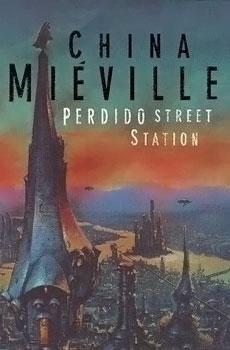
2000 · Bas-Lag, book 1 · Fantasy · New Weird, Weird Fiction, Steampunk
New Crobuzon: a city-state of smokestacks and militia spies under the ribs of some colossal dead thing, where khepri artists sculpt with body-secretions, the Remade serve sentences written into their flesh, and the scientist Isaac Dan der Grimnebulin takes two commissions he should have refused — restoring flight to a de-winged garuda, and feeding an unidentified caterpillar. The latter hatches into the slake-moths: predators that drink sentience and leave bodies breathing, against which the city's options narrow to a bargain with the Weaver (a spider-god aesthete who speaks in stream-of-consciousness) and Hell's ambassador, who declines. Renting, swarming, magnificent — the city itself is the masterpiece.
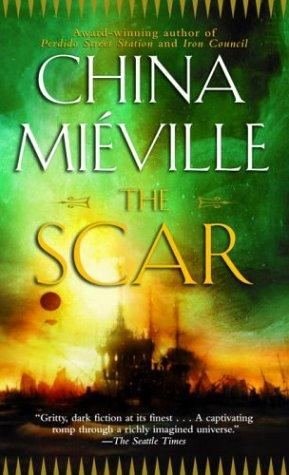
2002 · Bas-Lag, book 2 · Fantasy · New Weird, Weird Fiction
Fleeing New Crobuzon's aftermath, the translator Bellis Coldwine is press-ganged at sea into Armada: a floating city of lashed-together hulls centuries deep, ruled by the scarred Lovers, whose project escalates from raising a sunken drilling platform to chaining the avanc — a sea-beast from another reality — to hauling their city toward the Scar itself, a wound in probability where every possibility bleeds. Mercenary swordsman Uther Doul, his Possible Sword flickering through might-have-beens, guards the secret; Bellis, used by everyone including herself, files the genre's best unreliable report. Pirate adventure, vampire polities and probability theory: Miéville's most complete novel.
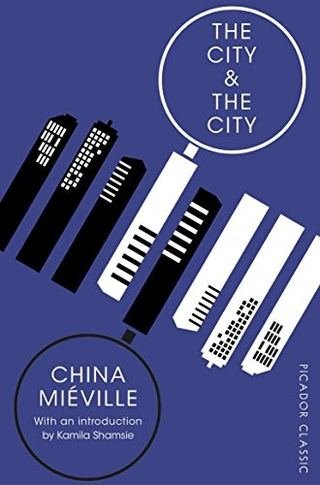
2009 · Science Fiction · Weird Fiction, Dystopia, Literary SF
Inspector Tyador Borlú of the Extreme Crime Squad investigates a murdered woman in Besźel — a crumbling Eastern European city occupying the same physical space as glossy Ul Qoma, its citizens trained from birth to 'unsee' the other city and its traffic, on pain of invoking Breach, the power that polices the separation. The victim crossed; the case must too. Miéville plays it as immaculate police procedural, withholding all fantastical explanation: the cities' division is enforced purely by habit, law and learned blindness, which is of course the point. The premise is impossible and the reader performs it personally somewhere around chapter three, unseeing whatever the plot files as elsewhere.
Series
b. 1952 · British
The most original British horror voice of his generation: Barker rewired the genre's relationship with the body and desire, founded the dark-fantasy register a generation now writes in, and gave horror cinema one of its enduring mythologies.
b. 1972 · American
The defining SFF writer of the 2010s: the unprecedented Hugo three-peat marked the genre's centre of gravity shifting — formally, demographically and thematically — and the Broken Earth is already canon, taught from secondary schools to doctoral seminars.
1920–2012 · American
The writer who proved science fiction could be literature without apologising.
