
Nana
Two very different women named Nana share a Tokyo flat and a tangle of love, ambition and rock-and-roll heartbreak; the definitive josei drama, and an aching unfinished one.
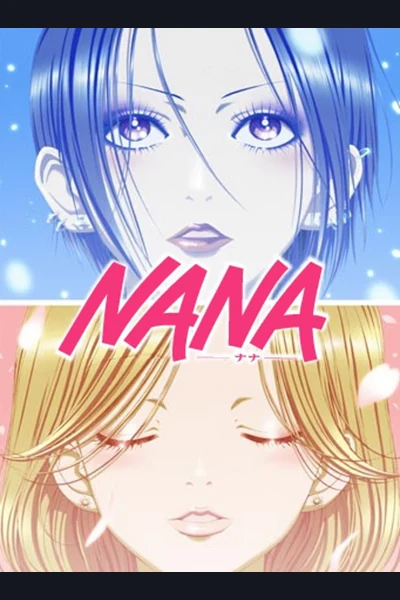
Two twenty-year-old women named Nana meet on a delayed train to Tokyo. Nana Komatsu—soon nicknamed Hachi—is romantic, impulsive and moving to join her boyfriend. Nana Osaki is a punk singer heading to the city to build a career after her former lover joined the successful band Trapnest. They later rent flat 707 together, because fate occasionally appreciates a number motif.
Ai Yazawa's manga began in Shueisha's Cookie in 2000. Publication went on hiatus in 2009 because of Yazawa's illness and remains unfinished after 21 volumes. Madhouse's 47-episode anime aired in 2006–07; two live-action films appeared in 2005 and 2006.
Overview
Nana fronts the band Black Stones, or Blast, alongside guitarist Nobu, bassist Shin and drummer Yasu. Her history with Trapnest bassist Ren makes musical ambition inseparable from love, dependency and public scrutiny.
Hachi seeks security through romance and repeatedly discovers that wanting to be loved does not identify a safe person to love. The two Nanas become one another's home while careers and relationships exert pressure from every direction.
Why it matters
Yazawa writes adult friendship with unusual precision. The central relationship is intimate, possessive, sustaining and difficult to classify, which is exactly why it feels larger than a tidy label. Romance may drive events; the emotional loss at stake is often the flat and the woman waiting there.
Fashion and music are not surface decoration. Clothes reveal aspiration and self-construction, while the bands turn private feeling into career product. Yazawa's Vivienne Westwood-inflected design gave the series an enduring visual identity.
What to expect
Expect sex, pregnancy, infidelity, emotional abuse, substance use and relationships shaped by unequal power. The series can be funny and warmly domestic, then painfully clear about how affection coexists with harm.
It is often called josei in casual discussion, but Nana ran in a shojo magazine aimed at older teens and young women. Demographic labels are shelving, not literary diagnosis.
Adaptations and versions
The anime follows the manga closely but stops without resolution because the source itself is unfinished. Its songs and performances make Blast and Trapnest convincing acts rather than fictional résumé entries.
The first live-action film is especially popular and features Mika Nakashima as Nana Osaki. Casting changes and compression affect the sequel.
Where to start
Read manga volume one or watch the anime. Both end before the larger story concludes, so enter knowing closure is not currently available. The live-action film is a useful third version after meeting the flatmates.
Verdict The SFcrowsnest take
Nana is an unfinished story about people who keep mistaking desire for direction. Its glamour attracts; its emotional honesty stays.
Yazawa's hiatus leaves an ache no invented ending should patch. Flat 707 remains one of manga's most convincing homes, precisely because everybody inside it eventually has somewhere else they think they must be.