
Chainsaw Man
A penniless lad merges with his pet chainsaw devil to claw out of crushing debt; equal parts gore, capitalism and loneliness, with a dog you'll be crying about.
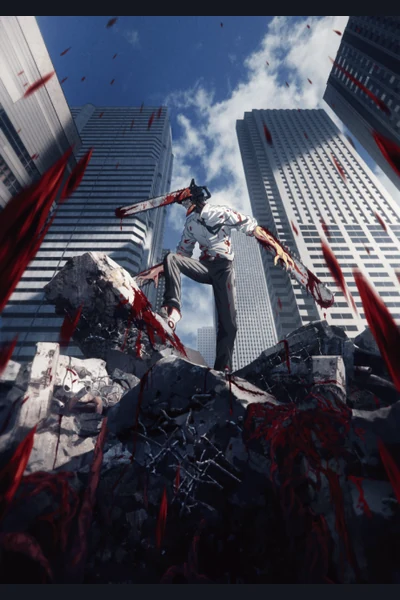
Denji is a teenager with no money, no education and no plausible route out of debt. He hunts devils for the yakuza with Pochita, a small orange creature who is both his pet and a chainsaw, because poverty in Chainsaw Man has already eaten dignity and is now checking the cupboards. Denji's ambitions are correspondingly modest: jam on bread, somewhere to sleep and perhaps intimate contact with another human being before death repossesses him.
Then death does exactly that. Pochita saves Denji by becoming his heart, allowing him to sprout chainsaws from his head and arms when he pulls a cord in his chest. Public Safety recruits him as a devil hunter under Makima, a calm superior whose management style combines soft speech, dog training and enough warning signs to close a motorway.
Tatsuki Fujimoto's manga began in Shueisha's Weekly Shonen Jump in 2018. Its first major part concluded in 2020; the series later continued digitally through Shonen Jump+. MAPPA's anime adaptation began in 2022. Both versions are violent, funny and deeply interested in what happens when a person denied ordinary needs mistakes exploitation for affection.
Overview
Devils in this world are born from human fears. The more potent the fear, the more dangerous the devil, which means humanity has accidentally turned collective anxiety into a weapons-development programme. Public Safety fields human hunters, contracted devil powers and hybrid oddities such as Denji against threats ranging from grotesque nuisances to concepts with teeth.
Denji joins a household with Aki Hayakawa, a disciplined hunter driven by revenge, and Power, a blood fiend whose personality suggests a feral cat has been given political immunity. Their domestic life—meals, arguments, ruined bathrooms and reluctant attachment—is as important as the dismemberment. Fujimoto understands that found family becomes meaningful through chores long before it becomes meaningful through speeches.
The plot can resemble a conventional monster-hunting series for several pages at a time. Then it changes direction, removes a supporting beam and waits to see which emotional floors collapse. Fujimoto's storytelling is cinematic without merely imitating cinema: silent sequences, abrupt cuts and carefully controlled page turns make ordinary gestures ominous and atrocities arrive with indecent speed.
Why it matters
The chainsaws attract attention, but deprivation is the real starting engine. Denji has been denied so much that his dreams sound ridiculous to people who take breakfast and personal freedom for granted. This makes him crude without making him stupid. He understands immediate desire perfectly; what he lacks is experience of healthy choice. Employers, gangsters and devils all discover that a starving boy can be controlled by showing him a menu.
That class anger distinguishes Chainsaw Man from cleaner power fantasies. Denji's transformation does not erase rent, hierarchy, sexual confusion or the possibility that a job with dangerous duties and free accommodation may still be a trap. Public Safety offers purpose but treats bodies as resources. The horror is not only that devils eat people. Institutions do it while completing the paperwork.
Fujimoto also refuses to separate the sublime from the idiotic. A scene may be exquisitely composed, emotionally devastating and interrupted by somebody behaving like a complete animal. The tonal collisions are deliberate. Adolescence, grief and desire do not queue politely by category, and neither does the manga.
What to expect
Expect heavy gore, mutilation, body horror, coercion, abusive relationships and major character deaths. The violence is fantastical but not weightless; bodies tear, blood travels and victories frequently arrive missing several parts. Sexual material is more suggestive than explicit, although manipulation through intimacy is central and deliberately uncomfortable. This is not a children's programme that happens to own a plush dog.
The humour is black, vulgar and often rooted in Denji's limited social development. Some readers find his preoccupations exhausting until the story reveals how thoroughly they have been shaped by neglect. Romance is the wrong word for much of what occurs. Longing, grooming, loneliness and confused attachment are more accurate and rather less suitable for greetings cards.
MAPPA's anime takes a controlled, live-action-influenced approach, with subdued performances, detailed domestic movement and a different ending sequence for each episode. Some manga readers expected louder cartoon exaggeration; the adaptation instead makes offices, flats and pauses feel tangible, so that the supernatural violence tears into a world that had briefly seemed capable of ordinary life.
Adaptations and versions
The manga remains the essential version. Its pacing, page turns and sudden absences are inseparable from Fujimoto's voice, and reading it makes clear why he is discussed as a creator rather than merely the supplier of a profitable premise. Begin at volume one and continue in publication order from the first part into the second.
The anime adapts the opening portion with considerable fidelity but a distinct directorial temperament. The Reze Arc continues the animated story theatrically; current UK release and home-viewing availability should be checked before publication. There are games and promotional collaborations, naturally, because no fictional critique of appetite is complete until placed on a beverage container.
Where to start
The anime is an excellent test of the premise and atmosphere. Watch its first episode; if the mixture of misery, tenderness and industrial gardening equipment works, continue. The manga is the better route for the complete available story and the purest version of Fujimoto's editing. Reading first will not ruin the animation, since movement, sound and performance provide their own surprises.
Verdict The SFcrowsnest take
Chainsaw Man has the appearance of adolescent excess and the internal organs of a serious story about poverty, control and the terrible decisions people make when offered their first scrap of affection. It is not profound because it owns a chainsaw. It is profound because Denji can cut through a devil and still has no reliable defence against a kind voice.
The manga is stranger, faster and more personal; the anime is measured, handsome and confident enough to let silence into the room. Both are recommended for adults and older teenagers comfortable with graphic violence and emotional ambush. Pochita is adorable. This is not evidence that the property intends you well.