
Initial D
A tofu-delivery kid turns out to be a mountain-pass street-racing prodigy; Eurobeat, drifting, and the car-culture anime that launched a thousand bumper stickers.
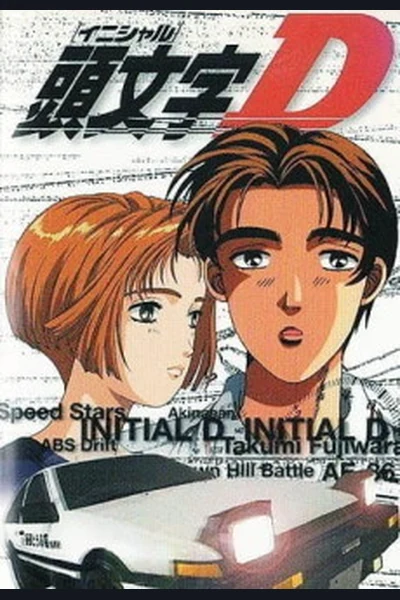
Takumi Fujiwara delivers tofu from his father's shop to a hotel on Mount Akina before dawn, driving an ageing Toyota AE86. Years of preserving both speed and bean curd have taught him extraordinary control. Local racers discover that their tuned machinery is being defeated by a sleepy teenager whose principal objective is returning home.
Shuichi Shigeno's manga ran in Kodansha's Weekly Young Magazine from 1995 to 2013 and filled 48 volumes. The anime began in 1998 and continued through numbered “Stages” until 2014, combining hand-drawn characters, evolving computer-generated cars and Eurobeat music that made downshifting feel like a constitutional event.
Overview
Takumi enters the world of mountain-pass racing through friend Itsuki and the Takahashi brothers, strategist Ryosuke and hot-headed Keisuke. His father Bunta knows exactly how skilled Takumi has become and treats this information with the relaxed cruelty of a parent waiting for a child to notice their own talent.
Races are tactical. Tyres, weight transfer, road knowledge and nerve matter more than declared horsepower. Shigeno explains technique clearly enough to inspire fascination and, regrettably, occasional imitation on public roads.
Why it matters
Initial D transformed the Toyota AE86 into a global enthusiast icon and carried Japanese drifting culture into international fandom. Its computer animation looks primitive in the first series, but the ability to stage readable races outweighed polished bodywork.
The central pleasure is Takumi's awakening. He begins without car enthusiasm because driving is unpaid work. Competition teaches him the difference between competence acquired for duty and desire chosen for himself.
What to expect
Expect illegal street racing, crashes, car terminology, romance and male friendship. Do not copy it: mountain roads contain traffic, cyclists and consequences without an accompanying Eurobeat cue.
Female characters receive uneven material, and later relationship drama can feel less precise than the driving. The machines are afforded considerably more diagnostic attention.
Adaptations and versions
The anime proceeds through First, Second, Fourth, Fifth and Final Stage, with Third Stage as a film between the second and fourth. Extra Stage follows supporting women; Battle Stage compiles races.
The New Initial D Movie trilogy retells early material with modern animation but replaces the classic Eurobeat identity. A 2005 Hong Kong live-action film changes characters and plot. Shigeno's MF Ghost is a later successor set in the same broad world.
Where to start
Watch First Stage and accept the early CG. Its music, direction and character work explain the cult more effectively than a pristine recap. Manga volume one is the best route for Shigeno's full career arc.
Verdict The SFcrowsnest take
Initial D makes mechanical sympathy dramatic. Takumi wins not because the old car is secretly magical but because repetition has taught him what the road will do next.
The anime's visuals aged; its momentum did not. Recommended for car enthusiasts and anybody who enjoys a quiet prodigy discovering that tofu delivery has accidentally become training.