The Amber Spyglass
Whitbread Book of the Year 2001 — the first children's book ever to take the overall prize — and the most theologically audacious bestseller in the YA canon; the trilogy's capstone and lightning rod alike.

The essential authors of science fiction, fantasy & horror — and where to start reading them.
Book Entry · Fantasy
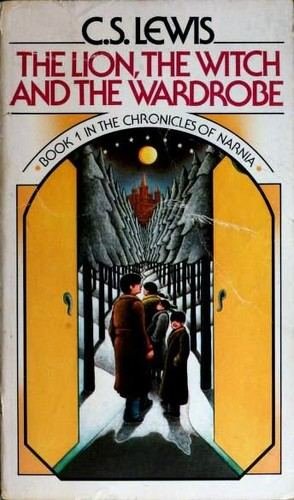
by C. S. Lewis · 1950 · The Chronicles of Narnia, book 1
Four evacuated children, one spare room, one wardrobe with no back: Lucy Pevensie steps through fur coats into snow, meets a faun carrying parcels, and opens the doorway to Narnia — a hundred years winter-bound under the White Witch, and never Christmas. Edmund's betrayal for Turkish delight, the thaw that runs ahead of Aslan like a rumour, the Stone Table cracked and the deeper magic from before the dawn of time: Lewis built the central myth of his faith into a children's adventure with such directness that generations absorbed it before noticing. Tolkien hated the mishmash — fauns, Father Christmas, talking beavers. A hundred million readers have registered their dissent.
One of the bestselling books ever written and the archetypal portal fantasy: the wardrobe is now a load-bearing structure of the entire genre, and the BBC and Disney adaptations renewed its franchise generation by generation.
Seven books, one wardrobe, a lion who is not a tame lion: Lewis's portal-fantasy cycle that has carried generations of children into the genre and argued theology with them on the way.
In the Guide from The Chronicles of Narnia:
Prefer Amazon? Buying through these links may earn SFcrowsnest a small commission, at no extra cost to you.
Buy on Amazon UK → Buy on Amazon US →As an Amazon Associate, SFcrowsnest earns from qualifying purchases.
Whitbread Book of the Year 2001 — the first children's book ever to take the overall prize — and the most theologically audacious bestseller in the YA canon; the trilogy's capstone and lightning rod alike.
Guardian Award winner and the launch of Chrestomanci: the wittiest of the great British children's fantasy sequences and a visible ancestor of the boarding-school-magic boom that followed two decades later.
A cult masterpiece of mythic YA — the standard against which Tam Lin retellings are measured — and the Jones novel writers (Gaiman included) most often name when asked what the form can do.