Blood of Elves
Premio Ignotus and (retrospectively) David Gemmell Legend Award winner: the pivot from celebrated stories to continental saga, and the template for the games' and series' Ciri-centred mythology.

The essential authors of science fiction, fantasy & horror — and where to start reading them.
Book Entry · Fantasy
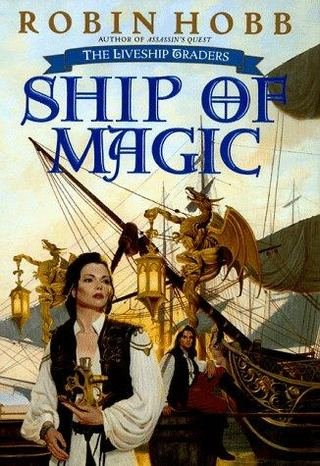
by Robin Hobb · 1998 · The Liveship Traders, book 1
A liveship quickens when three generations of its owning family die on its deck: the wizardwood figurehead wakes, remembers them all, and sails like nothing else afloat. Ephron Vestrit's death quickens the Vivacia — and his daughter Althea is cheated of her, the ship passing to a brutal brother-in-law who sets the sensitive vessel slaving, the cruellest cargo a feeling ship can carry. Around the family ruin Hobb arranges the pirate Kennit (ambitious, lucky, horribly plausible), the mad liveship Paragon, blind and beached, and sea serpents following the ships for reasons that re-frame the whole world. Bigger cast, saltier air, and arguably her finest sustained work.
The trilogy regularly named Hobb's best by her peers (Martin among them): a masterclass in multi-viewpoint structure whose serpent/dragon payoff rewires the entire Elderlings sequence.
Sentient ships quickened by family deaths, merchant dynasties in decline, pirates with ambitions and serpents with a destiny: Hobb's maritime masterpiece.
In the Guide from The Liveship Traders:
Prefer Amazon? Buying through these links may earn SFcrowsnest a small commission, at no extra cost to you.
Buy on Amazon UK → Buy on Amazon US →As an Amazon Associate, SFcrowsnest earns from qualifying purchases.
Premio Ignotus and (retrospectively) David Gemmell Legend Award winner: the pivot from celebrated stories to continental saga, and the template for the games' and series' Ciri-centred mythology.
The book where the Shannara saga found its own voice; its tree-rebirth tragedy remains one of commercial fantasy's most affecting endings, and it anchored the MTV adaptation.
The founding novel of anti-escapist fantasy — a bestseller that split readers permanently and opened the territory grimdark later settled; the Land's rendered beauty remains the genre's sharpest weapon against its own hero.