From the Earth to the Moon
The founding text of spaceflight fiction, cited as inspiration by rocketry pioneers Tsiolkovsky, Goddard and Oberth.

The essential authors of science fiction, fantasy & horror — and where to start reading them.
Book Entry · Science Fiction
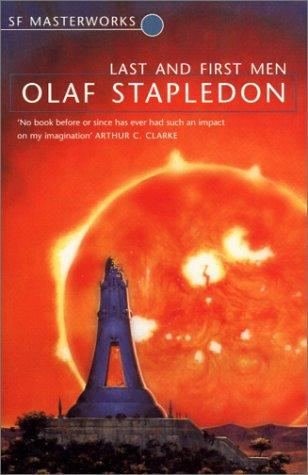
A future history spanning two billion years and eighteen human species, dictated to a present-day writer by one of the Last Men on Neptune. Civilisations rise, fall and are forgotten by the dozen; humanity is remade by catastrophe, genetic design and migration to Venus and Neptune; the Martians invade as clouds of viral intelligence. Individual characters barely exist — the protagonist is the species — yet the cumulative effect is overwhelming: tragic, austere and oddly consoling. The early chapters' guesses about twentieth-century politics misfired almost immediately, as Stapledon cheerfully expected.
The most ambitious future history ever attempted, directly inspiring Clarke, Lem and Baxter, and establishing deep time as science fiction's playground.
Prefer Amazon? Buying through these links may earn SFcrowsnest a small commission, at no extra cost to you.
Buy on Amazon UK → Buy on Amazon US →As an Amazon Associate, SFcrowsnest earns from qualifying purchases.
The founding text of spaceflight fiction, cited as inspiration by rocketry pioneers Tsiolkovsky, Goddard and Oberth.
Winner of the BSFA, Philip K.
Half of the most influential SF artefact of the twentieth century.