Author Profile · Science Fiction
Olaf Stapledon
1886–1950 · British
Who was Olaf Stapledon?
A Merseyside philosopher who served with a Quaker ambulance unit in the First World War, lectured on ethics and psychology, and wrote science fiction of a scope no one has matched before or since. Last and First Men chronicles two billion years and eighteen successor species of humanity; Star Maker widens the aperture to the entire history of the cosmos and its creator, making most space opera look like a parish newsletter. Stapledon barely bothered with individual characters or plots — his protagonists are species, his chapters aeons — yet the books burn with moral seriousness and a strange, austere poetry. Arthur C. Clarke regarded Star Maker as possibly the finest work of science fiction ever written.
Why they matter
The genre's great cosmological visionary. Stapledon's future histories and embedded inventions — Dyson spheres avant la lettre, genetic engineering, group minds — supplied raw material that writers from Clarke to Baxter have been mining ever since.
Essential books — and where to start
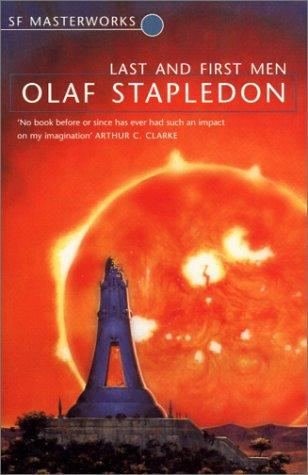
1930 · Science Fiction · Scientific Romance, Hard SF
A future history spanning two billion years and eighteen human species, dictated to a present-day writer by one of the Last Men on Neptune. Civilisations rise, fall and are forgotten by the dozen; humanity is remade by catastrophe, genetic design and migration to Venus and Neptune; the Martians invade as clouds of viral intelligence. Individual characters barely exist — the protagonist is the species — yet the cumulative effect is overwhelming: tragic, austere and oddly consoling. The early chapters' guesses about twentieth-century politics misfired almost immediately, as Stapledon cheerfully expected.
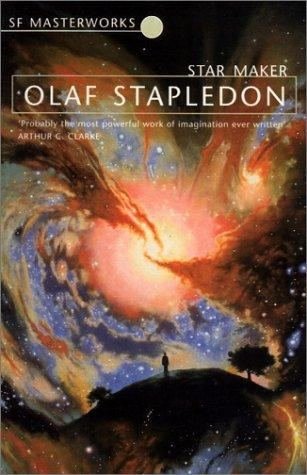
1937 · Science Fiction · Scientific Romance, Hard SF, First Contact
A man walks out of his suburban house after a quarrel, sits on a hill, and finds his consciousness flung across the universe. Joining with other minds, he tours the entire history of cosmic intelligence — symbiotic races, sentient stars, galactic utopias, the artificial worlds later called Dyson spheres — before the climactic, devastating audience with the Star Maker itself, an artist-creator who regards our cosmos as one draft among many. Written as fascism gathered in Europe, it is metaphysics delivered with the force of revelation.
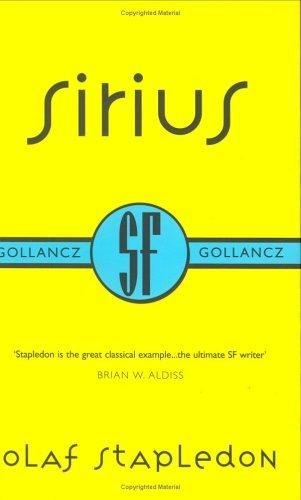
1944 · Science Fiction · Hard SF, Literary SF
Physiologist Thomas Trelone engineers a sheepdog with human-level intelligence and raises him alongside his daughter Plaxy. Sirius grows into a person trapped in a dog's body — wolfish senses, human mind, no hands, no peers — torn between the farm work he excels at, the music he composes for a voice no choir wants, and his profound, scandalous bond with Plaxy. Stapledon plays the premise absolutely straight, producing the genre's most moving study of an engineered consciousness that belongs nowhere. The wartime ending is quietly shattering.
1925–2017 · British
The bridge between British SF's catastrophe tradition and the New Wave he helped detonate.
b. 1967 · American
The most honoured short-fiction writer per page in genre history and the modern standard for conceptual rigour: proof that SF's core engine — the idea, followed honestly — still outperforms everything bolted around it.
1921–2006 · Polish
World SF's first undisputed giant outside the Anglosphere and the genre's most rigorous philosopher of the truly alien.
