Author Profile · Science Fiction
Iain M. Banks
1954–2013 · British (Scottish)
Who was Iain M. Banks?
Scotland's most celebrated literary double act, both of him: as Iain Banks he scandalised mainstream fiction with The Wasp Factory; as Iain M. Banks he rebuilt space opera around the Culture — a post-scarcity anarchist utopia run by benignly devious Minds, where the ships choose their own names (Of Course I Still Love You; Falling Outside The Normal Moral Constraints) and the interesting stories happen at the edges, where utopia interferes with its neighbours. Banks wrote galactic-scale imagination with a moralist's needle and a gleeful streak of the appalling; his villains are unmatched, and his afterlives, hells and games are political arguments wearing fancy dress. Dead at fifty-nine of cancer, announced with characteristic dark wit; the loss still smarts.
Why they matter
The writer who revived British space opera virtually single-handed and gave SF its most fully argued utopia. The Culture is the genre's standing answer to the question of what we might be at our best — and the Minds' ship names alone constitute a literary legacy.
Essential books — and where to start

1987 · The Culture, book 1 · Science Fiction · Space Opera
Horza, a shapeshifting Changer, fights for the Idirans — three-legged, three-metre religious warriors — against the Culture, on the reasoned conviction that a civilisation run by machines has forfeited the point of being alive. His mission: retrieve a refugee Culture Mind hiding in the tunnels of a dead world. Around that simple fetch-quest Banks detonates an entire universe — megaship collisions, a cannibal cult on a doomed island, the card game Damage played for lives — while quietly ensuring every cause Horza serves is wrong and every sacrifice futile. Space opera relaunched with the moral polarity deliberately reversed: the utopia is the antagonist's side.
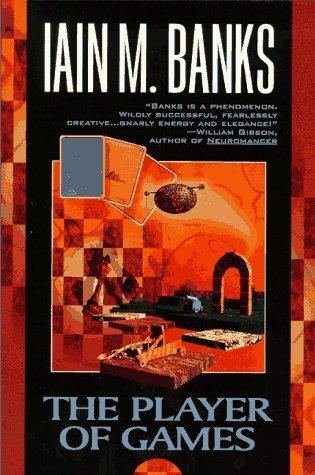
1988 · The Culture, book 2 · Science Fiction · Space Opera, Satirical SF, Social SF
Jernau Morat Gurgeh, the Culture's finest game-player, is bored — a serious condition in utopia — and susceptible when Special Circumstances comes recruiting, with a drone's blackmail to close the deal. His destination: the Empire of Azad, whose society is structured around a game so complex that performance in it determines rank, up to and including the throne. Gurgeh learns the game; the game, as designed, teaches Azad — its cruelty, its hierarchies, its three genders of institutionalised domination — and the Culture has sent exactly the player whose style will say what it wants said. The most elegant single demonstration of how Banks's utopia wins.
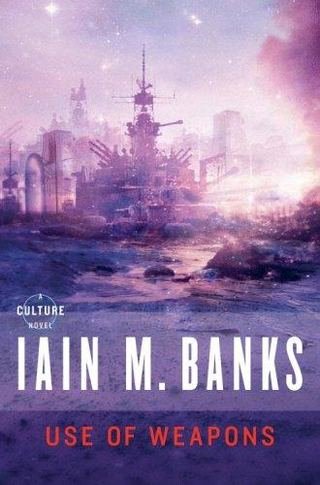
1990 · The Culture, book 3 · Science Fiction · Space Opera, Literary SF
Cheradenine Zakalwe, the Culture's favourite deniable instrument, is fetched out of retirement by Special Circumstances agent Diziet Sma and the drone Skaffen-Amtiskaw for one more dirty war among the uncivilised — while the novel's second strand runs backwards through his previous missions toward the thing in his past involving a chair, which the forward strand spends the whole book flinching from. Structure as ambush: the two streams meet in a reveal that re-files every page before it. War, conscience and the title's thesis — that anything, and anyone, can be made a weapon — in Banks's most formally daring SF novel.
Series
1919–2013 · American
A pillar of the field in every role it offers.
b. 1949 · American
Among the most awarded novelists in the field's history and the writer who proved space opera could be character-driven comedy of manners without losing its nerve.
1920–1986 · American
Dune is the genre's Lord of the Rings: the proof that science fiction could carry ecology, theology and dynastic politics at epic scale.
