Author Profile · Science Fiction
Samuel R. Delany
b. 1942 · American
Who is Samuel R. Delany?
A Harlem prodigy who published his first novel at twenty and had four Nebulas by twenty-six, Delany brought structuralism, semiotics and lived experience as a Black, gay, dyslexic New Yorker into a genre that had rarely met any of the above. His sixties novels — Babel-17, The Einstein Intersection, Nova — are dazzling compressions of linguistics, myth and space opera; Dhalgren, his million-selling 1975 enigma, parked an experimental novel the size of Ulysses in the middle of the SF shelves and dared readers to circle it forever. Later a professor and the field's most formidable critic-theorist, he remains its presiding intelligence: the writer who insisted science fiction was a way of reading, not just a marketing category.
Why they matter
The New Wave's prodigy and the genre's first great Black voice, who expanded what SF prose could do and whose criticism taught the field to understand itself. Babel-17's language-as-weapon and Nova's grail-quest space opera echo through cyberpunk and beyond.
Essential books — and where to start
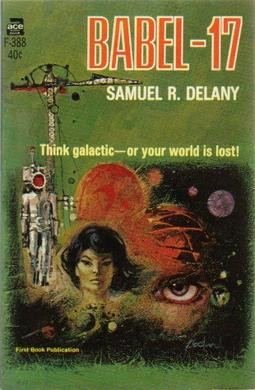
1966 · Science Fiction · Space Opera, New Wave SF
Rydra Wong — starship captain, telepath and the galaxy's most celebrated poet — is recruited to crack Babel-17, the unknown language transmitted around acts of Invader sabotage. She assembles a crew (including the discorporate dead, who handle the sensors) and discovers the language is the weapon: an analytic tongue so perfect it thinks its speaker, lacking the word 'I', programming treason into anyone fluent. Delany's Sapir-Whorf thriller doubles as a love letter to language itself, written by a prodigy of twenty-three married to a poet. The ideas have aged better than most of the era's rocketry.
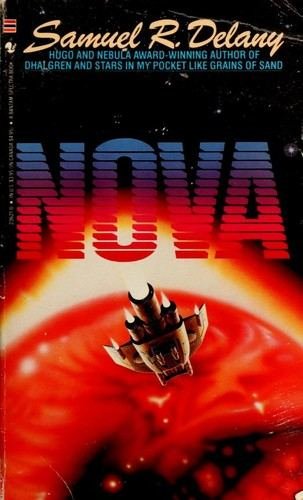
1968 · Science Fiction · Space Opera, New Wave SF
Lorq Von Ray, scarred captain and heir to one of the galaxy's great fortunes, races his patrician enemies Prince and Ruby Red to scoop seven tons of the reality-warping element Illyrion from the heart of an exploding star — a grail quest with cyborg jacks in every wrist, a novelist aboard theorising the book you're reading, and Tarot readings treated as sound engineering. Delany loads the space opera with grail mythology, economics and sensory syntax until the form glows like its nova. Written at twenty-five, and the genre took years to catch up.
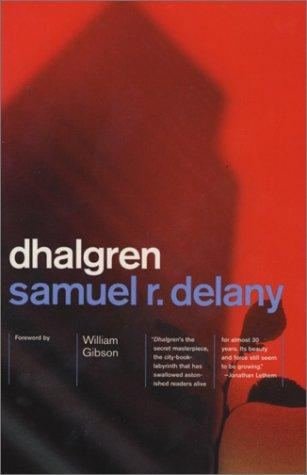
1975 · Science Fiction · New Wave SF, Literary SF, Dystopia
Bellona, a Midwestern city severed from the world by an unexplained catastrophe: two moons some nights, a swollen sun others, smoke that rearranges streets, and no two clocks or newspapers agreeing. Into it walks a nameless young drifter — the Kid — who acquires a notebook, a gang, lovers of several configurations and a poetry career, while the text loops back into itself, ending mid-sentence on the clause that begins it. Delany's million-copy experimental epic is SF's Finnegans Wake: adored, abandoned, annotated. Harlan Ellison hurled it across a room; William Gibson called it a riddle never meant to be solved.
1925–2017 · British
The bridge between British SF's catastrophe tradition and the New Wave he helped detonate.
1930–2009 · British
The most important literary stylist British SF has produced, the New Wave's central planet, and a prophet whose obsessions — media spectacle, manufactured desire, communities seceding from reality — simply became the news.
b. 1935 · American
The field's great professional, whose 1970s novels proved commercial SF writers could retool into literary ones.
