Author Profile · Science Fiction & Fantasy
Roger Zelazny
1937–1995 · American
Who was Roger Zelazny?
A poet with a master's in Jacobean drama who walked into 1960s SF and started writing gods: Buddha as revolutionary technocrat, Egyptian deities running interstellar houses of life and death, the princes of Amber knife-fighting through the one true reality of which all worlds are shadows. Zelazny's trademark was mythology retooled as science fiction and narrated by wisecracking immortals — first-person voices so charismatic the field has been imitating them ever since (every modern urban-fantasy narrator owes him rent). Six Hugos and three Nebulas, including the 1966 double crown when This Immortal tied Dune for the Hugo.
Why they matter
The New Wave's mythographer, who fused literary technique with pulp velocity and made it look effortless. Lord of Light is routinely shortlisted among the greatest SF novels, and Amber founded the parallel-worlds fantasy of swaggering immortal families.
Essential books — and where to start
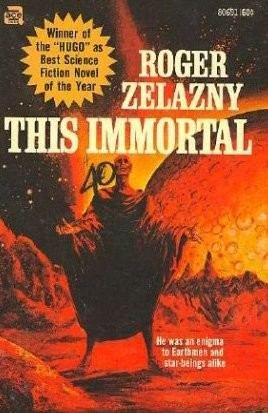
1966 · Science Fiction · Post-Apocalyptic, Mythic Fantasy, New Wave SF
Conrad Nomikos — arts commissioner of a depopulated, radiation-mutated Earth, several centuries old and cagey about it, possibly the Great Pan and possibly just a Greek with a limp — is assigned to escort a blue-skinned Vegan dignitary on a tour of the planet's ruins, knowing half the party wants the alien dead and the other half may be right. Mythology breathes under every Aegean rock, the banter is permanently cocked, and the question of whether Earth becomes a souvenir or a homeland turns on Conrad's stubborn, secret love for the place. Serialised as ...And Call Me Conrad.
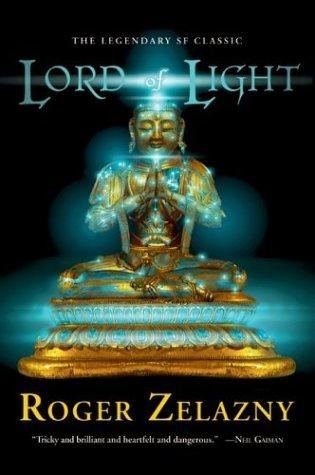
1967 · Science Fiction · Science Fantasy, Mythic Fantasy, Space Opera
The crew of a colony starship have used mutation-bred powers and body-printing technology to install themselves as the Hindu pantheon, ruling their world's descendants through controlled reincarnation and engineered ignorance. One of them, Sam, dissents — and resurrects Buddhism as a revolutionary technology, accelerating heaven's fall through rebellion, alliance with the planet's energy-being natives, and several deaths that don't take. Zelazny structures it as linked legends, opens in the middle, and packs in the genre's single worst/best pun ('then the fit hit the Shan'). Myth, mischief and munitions in perfect proportion.
1970 · The Chronicles of Amber, book 1 · Fantasy · Portal Fantasy, Heroic Fantasy, Science Fantasy
A man wakes in a private hospital with no memory, blackmails his way out, and discovers by bluffing through conversations with dangerous relatives that he is Corwin, prince of Amber — the one true city of which every world, Earth included, is a fading shadow. Recovering himself via the Pattern, he joins the family business: a war of succession among nine princes who walk between realities, trust no one, and keep each other's severed futures in reserve. Zelazny strips fantasy down to noir velocity; Corwin narrates like Philip Marlowe with a broadsword and centuries of grudges.
Series
1898–1963 · British (Irish-born)
Narnia is one of fantasy's two great gateway drugs (the other being The Hobbit) and the model for every portal fantasy since; with Tolkien, Lewis made Oxford the unlikely engine room of the modern fantastic.
1912–2005 · American
Quietly one of the most influential figures in the field: she trained the readership.
b. 1935 · American
The field's great professional, whose 1970s novels proved commercial SF writers could retool into literary ones.
