Author Profile · Science Fiction
Peter F. Hamilton
b. 1960 · British
Who is Peter F. Hamilton?
Rutland's most cosmically ambitious export, Hamilton writes space opera by the kilogram: the Night's Dawn trilogy runs to some three thousand pages in which the dead return to possess the living across a galactic civilisation — a premise that should be horror and instead becomes the biggest of big-canvas adventures, complete with living starships, asteroid settlements and Al Capone running an interstellar empire. The Commonwealth novels open with a physicist switching off a star and proceed from there. His futures are unfashionably optimistic about abundance — wormholes, rejuvenation, trains between planets — and his plotting weaves dozens of viewpoint threads into climaxes that actually pay off, which at his page counts is an engineering achievement in itself.
Why they matter
Britain's bestselling space opera writer and the modern master of the multi-thousand-page epic: Night's Dawn and Pandora's Star anchored the form's commercial revival and set the scale modern series compete against.
Essential books — and where to start
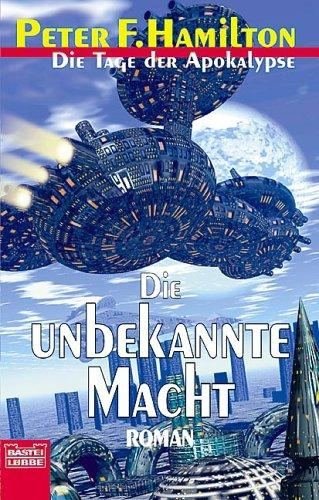
1996 · The Night's Dawn Trilogy, book 1 · Science Fiction · Space Opera, Supernatural Horror
The Confederation spans hundreds of worlds — bitek habitats that think, voidhawks grown from eggs, the charming rogue Joshua Calvert trading his way to a fortune — until, on the frontier world of Lalonde, something tears an opening between the universe and wherever the dead have been waiting. The returned possess the living, warp matter by will, and spread from settlement to starship while the Confederation slowly understands that its enemy is the afterlife itself. Hamilton orchestrates dozens of threads — including a possessed Al Capone organising the dead, to widespread readerly delight — at a scale space opera had simply never attempted.
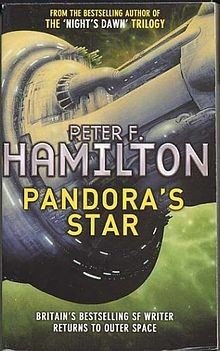
2004 · The Commonwealth Saga, book 1 · Science Fiction · Space Opera, Hard SF, First Contact
The Intersolar Commonwealth runs on wormholes (trains between planets, naturally) and rejuvenation, and has grown comfortably complacent — until an astronomer watches a star a thousand light-years away vanish inside an envelope in an instant. The starship built to investigate finds the barrier was not a prison wall but a quarantine, and switches it off. What comes out — MorningLightMorning, an alien intelligence whose biology makes coexistence a category error — gives space opera one of its great existential antagonists, while detective Paula Myo pursues a hundred-year terrorist case that turns out to be the same story.
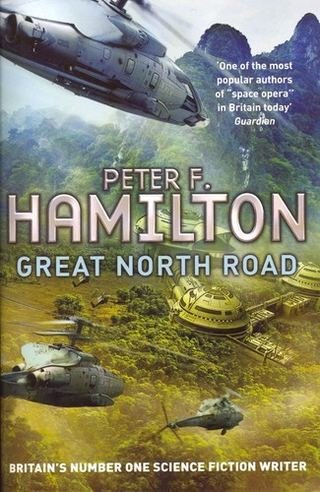
2012 · Science Fiction · Hard SF, Space Opera
Newcastle, 2143: a North clone — one of an industrial dynasty of brothers — is found murdered with the signature of a monster officially dismissed twenty years earlier, when Angela Tramelo was convicted for identical killings on the gateway world St Libra and insisted, throughout, that something alien did it. Detective Sidney Hurst's procedural (HVN-casework, budget meetings, canteen politics — Hamilton does future policing with loving sociological detail) interleaves with a military expedition into St Libra's vast bioluminescent jungle, where Angela, released as bait, waits to be vindicated. A thousand-page standalone that earns the length.
Series
b. 1957 · British
The keeper of British SF's cosmological flame: the bridge from Wells, Stapledon and Clarke to the modern field, and the standard for fiction in which the universe's full history is the stage.
b. 1942 · American
The field's most rigorous builder of alien minds and interstellar economics.
1917–2008 · British
The genre's great optimist-engineer and its finest writer of transcendent endings.
