Who was M. R. James?
Montague Rhodes James was one of the great medievalist scholars of his age — Provost of King's College, Cambridge, and later of Eton, a world authority on apocryphal manuscripts — who happened to write the finest ghost stories in the English language as Christmas entertainments for friends. His formula was deceptively simple: a dry, sceptical antiquary pokes at something old (a whistle, a mezzotint, a maze, a manuscript) and something very old and very wrong pokes back. The scholarly understatement makes the moments of horror — a face of crumpled linen, a mouth with teeth where no mouth should be — land like hammer blows.
Why they matter
James perfected the English ghost story and defined its rules so thoroughly that the form is simply called 'Jamesian'. His blend of antiquarian detail, rural unease and implacable revenants also makes him a grandfather of folk horror.
Essential books — and where to start

1904 · Horror · Ghost Story
The collection that perfected the English ghost story, containing among others 'Oh, Whistle, and I'll Come to You, My Lad' — in which a sceptical professor blows an ancient whistle found in a Templar ruin and is visited by something with a face of crumpled linen — and 'Canon Alberic's Scrap-book', written as early as 1894. James's antiquaries disturb the past with scholarly curiosity and are answered with patient, tactile malevolence. The horrors are glimpsed, never explained, and all the worse for it.
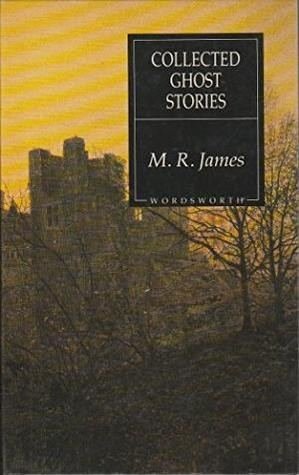
1931 · Horror · Ghost Story, Folk Horror
The omnibus gathering of James's four collections plus strays: 'Casting the Runes' (occult revenge by cursed slip of paper, later filmed as Night of the Demon), 'A Warning to the Curious' (a dug-up Anglian crown and its tireless guardian), 'The Mezzotint', 'Count Magnus' and more than two dozen others. Read together they map a haunted England of cathedral closes, coastal digs and country libraries where curiosity is the cardinal sin. The definitive bedside book for anyone who likes their dread courteous and their revenants implacable.
1869–1951 · British
The supreme master of nature-horror and a direct ancestor of cosmic horror: Blackwood demonstrated that the most profound terror comes from indifference and immensity, not fangs.
1943–2013 · British
The man who built the British mass market for horror: Herbert's paperbacks made the genre a working-class national pastime in the 1970s, and the visceral, urban, set-piece-driven school he founded runs through British horror to this day.
1916–1965 · American
The author of the finest haunted-house novel in the language and the great demonstration that horror's true engine is psychology: Hill House and 'The Lottery' are permanent fixtures of the canon and the curriculum alike.
