Who was Lord Dunsany?
Edward Plunkett, 18th Baron of Dunsany: Anglo-Irish peer, big-game hunter, chess champion, pistol-shooting champion of Ireland, and the man who invented the invented pantheon. Writing with a quill pen at speed and rarely revising, Dunsany conjured in The Gods of Pegāna an entire mythology with no roots in any earthly religion — a creative act of staggering audacity in 1905 — then spent decades spinning jewelled, ironic tales of gods, thieves and cities at the edge of the world. His prose, biblical in cadence and sly in wit, seduced Lovecraft into his Dream-lands and showed Tolkien's generation that whole secondary worlds could be built from nothing but language.
Why they matter
The fountainhead of modern fantasy world-building. Before Tolkien systematised the secondary world, Dunsany demonstrated it could exist at all, influencing Lovecraft, Howard, Le Guin, Gaiman and practically every fantasist since.
Essential books — and where to start

1905 · Fantasy · Mythic Fantasy
A slim book of linked prose-poems describing an entire invented cosmology: MANA-YOOD-SUSHAI, who made the gods and sleeps; the drummer Skarl, whose drumming keeps him asleep; the small gods, the prophets, and the End. There is no plot, no protagonist, no connection to any earthly mythology — just the audacious act of inventing a religion wholesale and writing its scripture in cadenced, King-James-flavoured prose. Published at Dunsany's own expense, it announced a completely new possibility for fantastic literature.

1912 · Fantasy · Mythic Fantasy, Weird Fiction
Fourteen brief tales written, unusually, to accompany Sidney Sime's illustrations rather than the other way round: 'The Hoard of the Gibbelins', whose treasure-keepers eat the burglars; 'How Nuth Would Have Practised His Art upon the Gnoles', the definitive cautionary tale for ambitious thieves; 'Chu-bu and Sheemish', the pettiest divine rivalry in literature. Dunsany's irony is at its driest here, repeatedly setting up romantic quests and decapitating them with a final sentence. Fantasy rarely gets funnier, stranger or more elegantly cruel.
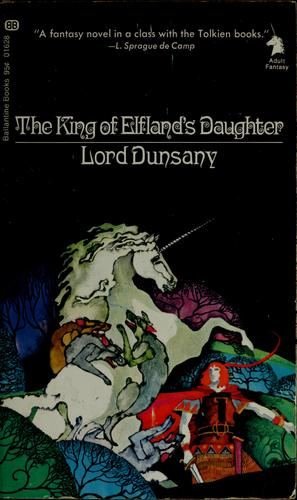
1924 · Fantasy · Mythic Fantasy
The parliament of Erl, wanting a magic lord, sends young Alveric across the twilight border to wed Lirazel, the King of Elfland's daughter. She comes to the fields we know, fails to learn to worship the stars correctly, and is recalled by a rune; Alveric's mad quest after her, and Elfland's slow tidal return to swallow Erl, fill the rest of this most beautiful of fantasy novels. Dunsany's prose — wistful, ironic, drenched in twilight — makes the borderland between mundane and magic into the book's true subject.
b. 1952 · British
The most original British horror voice of his generation: Barker rewired the genre's relationship with the body and desire, founded the dark-fantasy register a generation now writes in, and gave horror cinema one of its enduring mythologies.
b. 1959 · British
Jonathan Strange & Mr Norrell is the most acclaimed fantasy debut of its century — the book that made footnotes glamorous and English magic a serious literary subject — and Piranesi's labyrinth has already joined the genre's permanent architecture.
b. 1959 · Canadian
The Malazan Book of the Fallen is epic fantasy's most ambitious completed structure — the genre's standing answer to the question of how big, how deep and how uncompromising the form can go and still find a mass readership.
