Author Profile · Science Fiction
James Tiptree Jr.
1915–1987 · American
Who was James Tiptree Jr.?
For a decade the field's most admired 'male' short-story writer — praised for an ineluctably masculine style by no less than Robert Silverberg, in an introduction he never quite lived down — Tiptree was Alice B. Sheldon: artist, wartime intelligence officer, CIA analyst and research psychologist, writing from a P.O. box in McLean, Virginia. The stories are among the genre's darkest and most brilliant: alien contact as fatal compulsion, gender as predator-prey dynamics, humanity's extinction arranged politely and sometimes welcomed. The 1977 unmasking rearranged the field's assumptions about writing and gender overnight. Her death — a suicide pact with her ailing husband — was as unflinching as her fiction.
Why they matter
The genre's great case study in gendered reading and one of its supreme short-story writers, full stop. The Tiptree Award (now Otherwise) honoured gender-expanding SF in her name for decades, and stories like 'The Women Men Don't See' remain reference points.
Essential books — and where to start
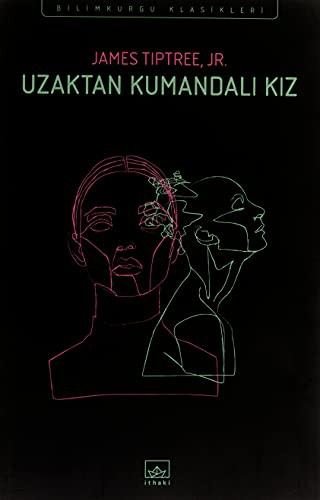
1973 · Science Fiction · Cyberpunk, Satirical SF, Feminist SF
In a future where advertising is banned, corporations sell through celebrities instead — beautiful 'gods' whose every visible preference moves product. P. Burke, seventeen, deformed and suicidal, is given the deal of her death: her discarded body in a cabinet, her mind remote-driving Delphi, a lab-grown angel who lives the gorgeous life the cameras follow. Then a chairman's son falls for Delphi and decides to free her from her 'controllers'. Tiptree's snarling carny-barker narration ('Listen, zombie') makes the inevitable ending land like a trap snapping shut. The body-image satire has only sharpened in the influencer era.

1976 · Science Fiction · Feminist SF, Time Travel
A solar flare throws the all-male crew of a circumsolar mission three hundred years forward, into rescue by the Gloria — a ship of cheerful, competent women from an Earth where a plague long ago ended both men and, the rescued astronauts slowly realise, the entire social order built around them. Tiptree lets her three men — the decent scientist, the alpha commander, the godly major — reveal under disinhibiting drugs exactly what each would do with a world of women, and lets the women, who have been listening politely, draw the obvious conclusion. Clinical, courteous and devastating.

1990 · Science Fiction · Feminist SF, New Wave SF, First Contact
The posthumous omnibus that secured the legend: eighteen stories including 'The Screwfly Solution' (a gendered extermination seen from inside, published as by Raccoona Sheldon), 'Love Is the Plan the Plan Is Death' (alien biology narrating its own tragedy), 'The Women Men Don't See' (two women who prefer aliens to patriarchy, narrated by a man who can't see why), and 'A Momentary Taste of Being' (humanity as gamete). Tiptree's universe runs on the death-wired intersection of sex and extinction, delivered in prose that grabs the reader by the collar. The essential collection.
1925–2017 · British
The bridge between British SF's catastrophe tradition and the New Wave he helped detonate.
b. 1939 · Canadian
The Handmaid's Tale is the most culturally active dystopia of the present era — its red cloaks now appear at actual legislative hearings — and Atwood's prestige carried speculative fiction into rooms that had pretended not to know its name.
1930–2009 · British
The most important literary stylist British SF has produced, the New Wave's central planet, and a prophet whose obsessions — media spectacle, manufactured desire, communities seceding from reality — simply became the news.
