Author Profile · Science Fiction
Frank Herbert
1920–1986 · American
Who was Frank Herbert?
A West Coast journalist, sometime speechwriter and lifelong autodidact who went to Oregon to write a magazine piece about government attempts to stabilise sand dunes and came back with the seed of the bestselling science fiction novel of all time. Herbert's obsessions — ecology, religion as politics, the menace of charismatic leaders, eugenics, spice — fused in Dune into a planet so real it has its own appendices, and a hero whose triumph is deliberately indistinguishable from catastrophe. He spent five sequels making sure nobody mistook Paul Atreides for a role model, with diminishing subtlety and undiminished ambition.
Why they matter
Dune is the genre's Lord of the Rings: the proof that science fiction could carry ecology, theology and dynastic politics at epic scale. Its warnings about messiahs remain the most misread moral in SF.
Essential books — and where to start
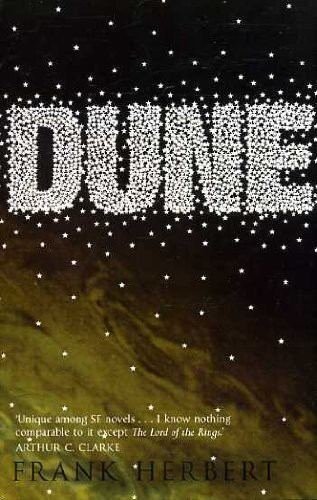
Dune ★ start here
1965 · Dune, book 1 · Science Fiction · Space Opera, Science Fantasy, Social SF
The desert planet Arrakis is the universe's sole source of the spice melange — geriatric drug, prescience catalyst, and the substance that makes interstellar navigation possible. Into this trap walk the noble Atreides, betrayed on imperial orders; out of it rises young Paul, adopted by the Fremen, surfing their prophesied messiah legend (planted centuries before by Bene Gesserit missionaries) towards a throne and a jihad he can foresee but not prevent. Ecology, religion, politics and giant sandworms in one impossibly rich package — rejected by some twenty publishers before Chilton, of car-manual fame, took the gamble.
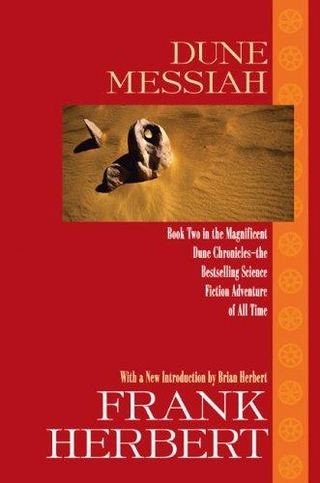
1969 · Dune, book 2 · Science Fiction · Space Opera, Social SF
Twelve years on, Paul Muad'Dib is emperor of the known universe and his jihad has killed sixty billion people. Herbert's sequel is deliberately smaller and crueller: a conspiracy of Bene Gesserit, Tleilaxu and Spacing Guild closes around Paul, baited with a ghola resurrection of his dead friend Duncan Idaho, while Paul walks a prescient tightrope where every path costs more than he can bear. Fans expecting triumphant adventure were furious, which was precisely the point — the book exists to detonate the hero-worship the first volume had accidentally invited.
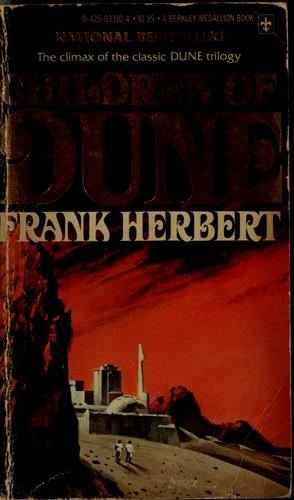
1976 · Dune, book 3 · Science Fiction · Space Opera, Science Fantasy
Paul's twin heirs, Leto and Ghanima, born with the ancestral memories of all their forebears, must outmanoeuvre their aunt Alia — possessed from within by the genetic ghost of Baron Harkonnen — and a blind Preacher come out of the desert speaking heresy with a familiar voice. Leto's solution, the fusion with sandtrout that begins his transformation into something no longer human, sets up the Golden Path: survival for the species at the cost of everything personal. Dense, strange and the point where the saga commits fully to its four-thousand-year argument.
Series
1954–2013 · British (Scottish)
The writer who revived British space opera virtually single-handed and gave SF its most fully argued utopia.
b. 1949 · American
Among the most awarded novelists in the field's history and the writer who proved space opera could be character-driven comedy of manners without losing its nerve.
1926–2011 · American-Irish
The bridge between SF and fantasy readerships and the genre's great gateway author for young readers — particularly girls, whom the field had largely ignored.
