Author Profile · Horror
Arthur Machen
1863–1947 · British (Welsh)
Who was Arthur Machen?
A Welsh clergyman's son from Caerleon, raised among Roman ruins and border hills he never stopped seeing as thin places between worlds. Machen scraped a living in literary London as translator, actor and journalist while writing visionary fiction in which the material world is a veil over something ecstatic or appalling — frequently both. The Great God Pan scandalised the 1890s with its decadent fusion of pagan survival and surgical transgression; The Hill of Dreams distilled his mysticism into something closer to prose poetry. During the First World War his story 'The Bowmen' accidentally spawned the Angels of Mons legend, which rather proved his point about the porousness of reality.
Why they matter
A foundational figure of weird fiction whom Lovecraft ranked among the modern masters of horror. Machen's vision of ancient, inhuman survivals beneath the pastoral surface feeds directly into cosmic and folk horror alike.
Essential books — and where to start
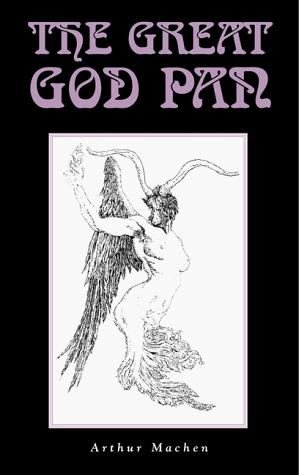
1894 · Horror · Weird Fiction, Cosmic Horror
A Welsh brain surgeon performs an experiment to let a young woman 'see the great god Pan'; she is left an imbecile, and years later a mysterious Helen Vaughan moves through London society leaving suicides in her wake. Machen assembles the story sidelong, through fragments and overheard horrors, until the appalling lineage connecting experiment and femme fatale becomes clear. Denounced as degenerate filth in 1894, which did sales no harm at all, it fuses pagan survival, sexual panic and the dissolution of form into something still genuinely disquieting.
1895 · Horror · Weird Fiction, Folk Horror
An episodic novel in the Stevenson mould: two London idlers keep crossing paths with mysterious strangers, each with a tale to tell, while a trio of sinister impostors hunt a man with spectacles. Embedded within are two of the most influential weird tales ever written — 'The Novel of the Black Seal', with its hints of a stunted pre-human race surviving in the Welsh hills, and 'The Novel of the White Powder', in which a chemist's prescription goes catastrophically, gelatinously wrong. The frame is playful; the contents are nightmare fuel.
1907 · Horror · Weird Fiction, Literary SF
Lucian Taylor, a poor parson's son in rural Wales, slips between the modern world and an inner Roman city of golden decadence conjured from the ruins of Isca Silurum, pursuing a private ecstasy that gradually consumes him in the wilderness of London. Written in the 1890s but unpublishable until 1907, it is Machen's most autobiographical and most beautiful book — less a horror novel than a study of imagination as a sacrament that can also be a poison. The prose is jewelled, hypnotic and quite unlike anything else of its era.
1869–1951 · British
The supreme master of nature-horror and a direct ancestor of cosmic horror: Blackwood demonstrated that the most profound terror comes from indifference and immensity, not fangs.
1917–1994 · American
The hinge between Lovecraft's cosmic age and the psychological thriller: Psycho founded the serial-killer genre, and Bloch's insight — that the scariest monster is the neighbour — became modern horror's operating premise.
b. 1946 · British
The bridge between Lovecraft's tradition and modern British unease, and the field's standard for sustained literary quality: multiple Grand Master and lifetime honours from every body that issues them, and an influence on literate horror that compounds by the decade.
