
The Big O
In a city with no memory, a tuxedoed negotiator summons a colossal art-deco mecha; equal parts Batman, Bond and Giant Robo, and dripping with retro-noir cool.
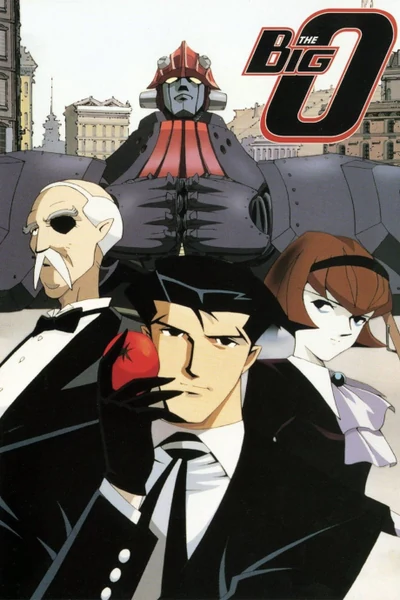
Overview
The Big O is what happens when Sunrise pours Batman, film noir, Giant Robo, art-deco architecture and existential amnesia into the same polished black limousine. Paradigm City is a metropolis whose citizens lost their memories decades ago. Roger Smith, a wealthy negotiator in a tuxedo, solves problems with dry manners, a deadpan android assistant and, when diplomacy has been thoroughly insulted, a colossal robot called Big O.
It is mecha as detective fiction, all shadows, domes, clocks and secrets. The show looks backwards to pulp and noir while worrying about identity, history and whether a civilisation without memory can be trusted with giant machines. The answer, in fairness, is usually no.
Why it matters
The Big O stands out because it treats the giant robot not as a military platform or toy ritual but as mythic architecture. Big O rises from beneath the city like a judgement in iron, summoned by a man whose job title is somehow both negotiator and urban sorcerer with cufflinks.
Its international cult reputation is also notable. The series found particular affection among Western viewers, helped by its familiar noir-superhero flavour and late-night animation mood. It feels both Japanese and transatlantic, as if Bruce Wayne had mislaid Gotham and ended up in a Sunrise production meeting.
What to expect
Expect episodic mysteries, stylish conversations, android melancholy and sudden robot battles that arrive with satisfying mechanical ceremony. The early material leans into case-of-the-week noir. The larger questions about memory and reality become more prominent as the series continues.
The tone is cool rather than frantic. Roger Smith is not the usual hot-blooded pilot shouting attack names until the universe behaves. He is urbane, self-possessed and faintly ridiculous in precisely the way all wealthy masked-adjacent men with secret machinery are faintly ridiculous.
Viewers wanting clean answers should be warned: The Big O is more interested in atmosphere and metaphysical unease than in putting every file neatly back in the cabinet.
Adaptations and versions
The Big O is an original anime from Sunrise, with related manga material following around the property. The television anime is the central version and the one to prioritise.
Its production and broadcast history includes international interest that helped shape its continuation, a point worth final-checking before publication. For most readers, though, the key distinction is simple: watch the anime first.
Where to start
Start at episode one and let the setting do its work. The first half establishes Paradigm City, Roger, Dorothy and the show's unusual mixture of detective fiction and super-robot grandeur.
If you enjoy Batman: The Animated Series, retro-future design or giant machines emerging from beneath moody city streets, this is very much your sort of raincoat.
Verdict The SFcrowsnest take
The Big O is stylish, cryptic and wonderfully self-possessed: a mecha noir where memory is missing and the robot has better entrance timing than most actors. It does not resolve every anxiety it raises, but it looks magnificent while making the city nervous.