
Space Runaway Ideon
Refugees pilot a mysterious ancient mecha powered by a cosmic force that very much does not wish to be trifled with; Tomino's apocalyptic epic with one of anime's bleakest finales.
Overview
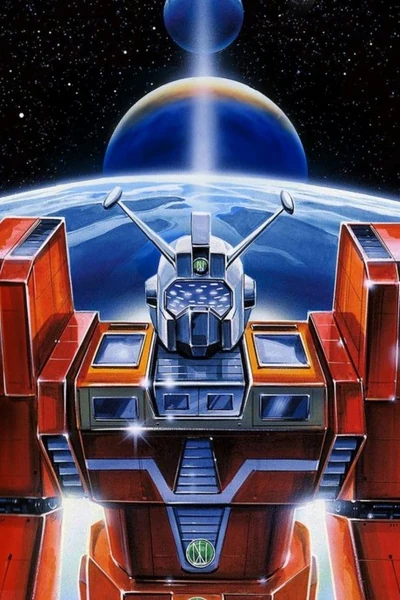
Space Runaway Ideon is Yoshiyuki Tomino's cosmic anxiety engine disguised as a giant-robot series. A group of human colonists uncover an ancient machine, the Ideon, and soon find themselves pursued through space by the alien Buff Clan. Unfortunately, the machine appears to be powered by a mysterious force whose attitude toward sentient life might politely be described as unsentimental.
On paper, this is another mecha space opera from the post-Gundam era. In practice, it is a slow march toward apocalyptic scale, full of misunderstanding, retaliation and the dreadful suspicion that nobody involved is emotionally qualified to be near a universe-ending device.
Why it matters
Ideon matters because it pushes Tomino's recurring concerns — war, communication failure, traumatised children, adults making catastrophic decisions — into full cosmic tragedy. Where Gundam grounded robot warfare in political and military systems, Ideon turns escalation into metaphysics. The more everyone fights, the larger the consequences become, until the story seems to be asking whether civilisation itself is just a feedback loop with weapons attached.
Its influence can be felt in later apocalyptic anime, particularly in works that combine mecha spectacle with psychological or existential dread. It is not light viewing. Tomino was not, at this point, producing comfort blankets. He was knitting warning flags.
What to expect
Expect bleak space opera, interpersonal stress and a gradual widening of scale. The show begins with pursuit and survival, but its real subject is escalation: every side feeling justified, every misunderstanding becoming ammunition, every attempt at control revealing how little control anyone has.
The television series' history and ending are tied to later film material, so newcomers should be aware that the full Ideon experience is not simply a tidy stand-alone TV run. The emotional reputation of the work rests heavily on its climactic material, which is famous for good reason and not because it sends everyone home with a commemorative biscuit.
Content includes war, death, child endangerment and apocalyptic imagery. It is spoiler-light to say only this: do not expect the universe to be especially forgiving.
Adaptations and versions
Space Runaway Ideon is an original Sunrise anime, followed by compilation and concluding film material that shaped its legacy. The exact viewing path should be checked for available editions before publication, but the broad route is the television series plus the relevant films for the completed arc.
There are later references, model kits and franchise echoes, but Ideon is primarily remembered as Tomino's severe, strange, cosmic mecha tragedy.
Where to start
Start with the television series if you want the build-up, then move to the films for the larger ending material. It is worth approaching as historical science fiction, not as frictionless modern entertainment. Some of the period craft is rough; the ambition is not.
If you are coming from Evangelion or darker Gundam entries, Ideon makes an illuminating ancestor. Just do not wander in expecting a cheerful robot romp. The title says runaway, and it is not joking.
Verdict The SFcrowsnest take
Space Runaway Ideon is grand, grim and increasingly terrifying, a super-robot story that peers over the edge of the cosmos and finds no safety rail. It can be uneven, but its ambition is ferocious. Few giant robots have made existence itself feel quite so poorly supervised.