Sailor Moon
Schoolgirls transform into cosmic guardians and save the world in the gaps between detentions; the magical-girl blueprint and a cherished queer-culture touchstone.
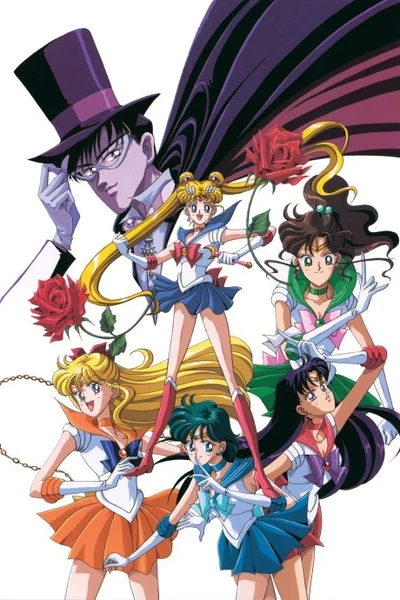
Usagi Tsukino is a schoolgirl who oversleeps, performs badly in tests and cries with impressive commitment. A talking cat named Luna informs her that she is Sailor Moon, guardian of love and justice. The universe has examined available leadership qualities and chosen emotional sincerity over punctuality.
Naoko Takeuchi's manga began in Kodansha's Nakayoshi in 1991. Toei Animation's first television adaptation ran from 1992 to 1997; Sailor Moon Crystal later offered a version closer to the manga, followed by Eternal and Cosmos films. International broadcasts introduced extensive edits, renamed characters and localisation decisions now preserved as both history and cautionary exhibit.
Overview
Usagi gathers the Sailor Guardians—Mercury, Mars, Jupiter and Venus—while seeking a princess and defending Earth from forces tied to a lost lunar kingdom. Tuxedo Mask provides roses, encouragement and a romantic mystery with variable practical utility.
Later arcs expand the team through the Outer Guardians and new cosmic threats. The story combines reincarnation, planetary mythology, school life and queer relationships within a structure of friendship and transformation. Evil generally arrives with excellent tailoring and insufficient respect for teenage schedules.
Why it matters
Sailor Moon fused magical-girl transformation with sentai team action and long-form romance, creating a template copied across animation and live action. Its heroines can be feminine, comic, frightened and powerful without treating those qualities as contradictions.
The series became particularly important to queer audiences. Haruka and Michiru's relationship, gender presentation and the later Sailor Starlights offered recognition even when overseas versions attempted to edit it into confusion. Some localisations recast lovers as cousins, proving censorship can make a programme considerably stranger while trying to make it conventional.
Takeuchi's manga is elegant and swift; the 1990s anime develops daily friendships through a much longer episodic run. Each reveals a different strength of the property.
What to expect
Expect transformation sequences, romance, comic school trouble and increasingly cosmic jeopardy. Violence is stylised, but death, sacrifice and frightening imagery occur. The 1990s series is warmer and more leisurely; Crystal is faster and more plot-driven.
Usagi's crying is not a flaw to be corrected before heroism begins. She grows while remaining emotional, and her empathy becomes a form of power. Younger viewers can enter easily, although classifications and later darkness should still be checked.
Adaptations and versions
The manga runs through five major arcs. The 1990s anime adapts them with extensive changes and original episodes. Crystal covers the early arcs, with Eternal and Cosmos completing that continuity in film form.
There is also a live-action Japanese television series, musicals and games. None is required. Older English dubs may contain censorship and rewritten relationships; modern uncut editions are preferable.
Where to start
Choose the 1990s anime for character comedy and cultural history, Crystal for a shorter manga-shaped route, or manga volume one for Takeuchi's art. Do not attempt to interleave them. The Moon Kingdom has endured enough fractured continuity.
Verdict The SFcrowsnest take
Sailor Moon made friendship, romance and unapologetic femininity compatible with planetary heroism. Its formulas show their age and some comedy repeats, but its emotional generosity remains difficult to counterfeit.
The manga is graceful, the original anime lovable and Crystal efficient. Essential magical-girl history and still a welcoming story in its own right. Fighting evil by moonlight remains possible; winning love by daylight may require finishing the homework.