
GeGeGe no Kitaro
A one-eyed yokai boy mediates between humans and Japan's vast menagerie of folklore spirits; Shigeru Mizuki's beloved institution that taught a nation its own ghosts.
Overview
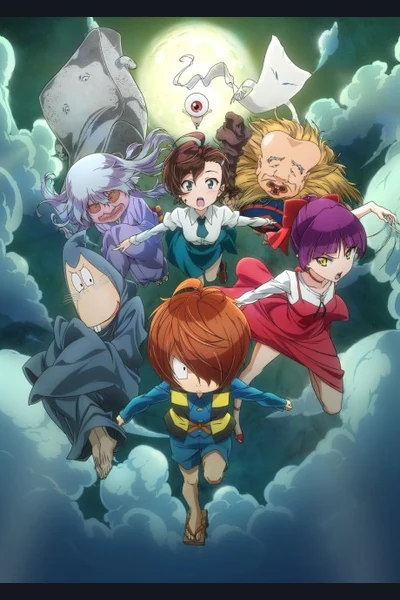
GeGeGe no Kitaro is not merely a supernatural manga and anime franchise. It is one of the great public-service departments for Japanese ghosts. Created by Shigeru Mizuki, the series follows Kitaro, a one-eyed yokai boy who mediates between humans and the vast, quarrelsome, frequently unhygienic population of spirits and monsters from Japanese folklore.
Kitaro is assisted by one of manga's more memorable parental arrangements: Medama-Oyaji, his father's spirit living as a tiny eyeball. This is a concept that would make most family therapists pause, sharpen a pencil and ask whether everyone has been sleeping properly.
Why it matters
Shigeru Mizuki did enormous work in bringing yokai folklore into modern popular culture. GeGeGe no Kitaro helped teach generations of readers and viewers the shape, names and habits of Japan's supernatural menagerie. Many later anime and manga involving spirits, folklore and monster societies owe something to Mizuki's mixture of comedy, spookiness and anthropological curiosity.
The series also carries Mizuki's humanism. Its monsters are not simply jump-scare devices. They are neighbours, warnings, historical leftovers and moral irritants. Sometimes humans are the problem. Sometimes yokai are. Often the real horror is greed, arrogance or the assumption that the modern world has no room left for old stories.
What to expect
Expect episodic supernatural adventures with a tone that can run from child-friendly mischief to genuine eeriness. Kitaro is a mediator more than a conventional action hero, although he is perfectly capable of dealing with a monster when diplomacy has fallen into a swamp.
Different versions shift the balance. Some are more comic, some darker, some more pointed in their social commentary. That flexibility is part of the property's longevity. Yokai are wonderfully adaptable creatures. Give them a new decade and they will find fresh anxieties to crawl out of.
For Western newcomers, some folklore references may need a little context, but that is part of the pleasure. GeGeGe no Kitaro is a doorway into a supernatural tradition broader and stranger than the usual vampire-werewolf furniture.
Adaptations and versions
The manga is the origin point, while Toei Animation has returned to the property repeatedly across decades. This means there are multiple anime series rather than one definitive modern edition. Each iteration reflects its own period, audience and broadcast expectations.
For publication, edition details and naming history should be checked carefully, as the property has a long and winding path. The important point for readers is simple: this is a foundational yokai work, not just another monster-of-the-week title.
Where to start
Curious newcomers can begin with a modern anime version for accessibility, then move back toward Mizuki's manga to understand the source. Readers already interested in folklore should go straight to the manga where available, as Mizuki's drawings have a texture that later adaptations can honour but not replace.
Do not worry too much about total chronology at first. Treat Kitaro as folklore itself: recurring, retold and slightly different depending on who has gathered around the fire.
Verdict The SFcrowsnest take
GeGeGe no Kitaro is a cornerstone of yokai pop culture, funny, macabre and quietly wise about the monsters humans choose not to see. It is also proof that a tiny eyeball father can become a beloved cultural institution, which is heartening in ways one perhaps should not examine too closely.