
Perfect Blue
A pop idol turns actress and watches her own identity unravel amid a stalker and a string of murders; Satoshi Kon's dazzling psychological thriller, endlessly borrowed-from by Hollywood.
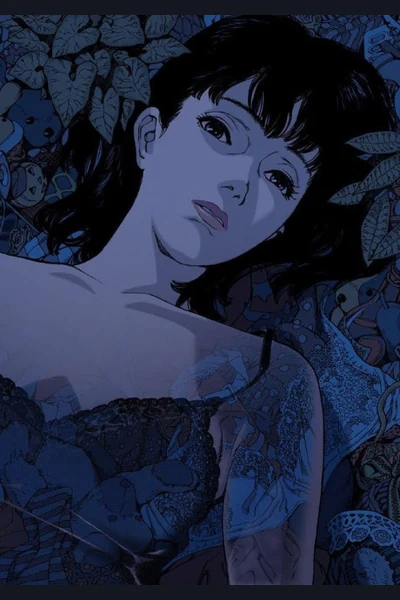
Overview
Perfect Blue is one of those films that has spent decades being called prophetic, which is unfair only because it was already frightening enough at the time. Directed by Satoshi Kon and animated by Madhouse, it follows Mima Kirigoe, a pop idol attempting to reinvent herself as an actress while her public image, private identity and perceived reality begin to split apart.
The film is a psychological thriller about celebrity, performance, stalking and the violence of being watched. It is also a reminder that animation can do interior collapse with a precision live action often envies. Kon turns cuts, reflections and repetitions into weapons. By the end, even the viewer starts checking the floorboards for narrative stability.
Why it matters
Perfect Blue matters because it announced Satoshi Kon as a major director and laid out many of his enduring obsessions: identity as performance, media as hallucination, reality as something edited rather than simply lived. Later Kon works would be warmer or more expansive, but this film has the cold concentration of a needle.
It has also become a touchstone for discussions of anime's influence on global cinema. Its images and ideas have been echoed widely, sometimes openly and sometimes with the discreet cough of the borrower pretending not to have pockets. More importantly, it proved that an animated thriller could be adult, rigorous and genuinely unsettling without leaning on fantasy spectacle.
What to expect
Expect a compact, disturbing film. Perfect Blue is not comfort viewing, unless one's idea of comfort involves watching fame chew through a nervous system. The story deals with stalking, sexualised exploitation, assault, murder, dissociation and the ugly machinery of entertainment industries that package young women as consumable images.
Kon's direction deliberately destabilises the viewer. Scenes repeat, identities blur and the boundary between performance and reality becomes increasingly treacherous. The film is spoiler-sensitive, not because it depends on a single trick ending, but because its power lies in the accumulation of doubt.
It is also visually exact. The horror often comes not from gore but from framing: a screen within a screen, a room that feels watched, a reflection that seems to have its own opinion.
Adaptations and versions
The anime film is the defining version. It draws on a novel source but is best understood as Satoshi Kon's cinematic statement, shaped by his editing instincts and Madhouse's controlled visual language.
There are no long series commitments here, no continuity labyrinth, no need to consult a flowchart kept under glass. It is a film. Watch the film, ideally without interruptions and with the lights set to "uneasy".
Where to start
Start and finish with the film. If you are exploring Kon's work more broadly, Perfect Blue makes a bracing entry point, though Tokyo Godfathers, Millennium Actress or Paprika may be gentler depending on one's tolerance for psychological abrasion.
For this field guide, Perfect Blue should be treated as essential adult anime cinema, but with clear content warnings. It is not a casual Friday-night recommendation for the unsuspecting.
Verdict The SFcrowsnest take
Perfect Blue remains a dazzlingly nasty little masterpiece: sharp, claustrophobic and horribly current. It understands that the most frightening monster may be the public version of yourself, still smiling after you have left the room.