
Only Yesterday
A woman reflects on her 1960s childhood during a country trip; grown-up and quietly nostalgic, and unreleased in the US until 2016.
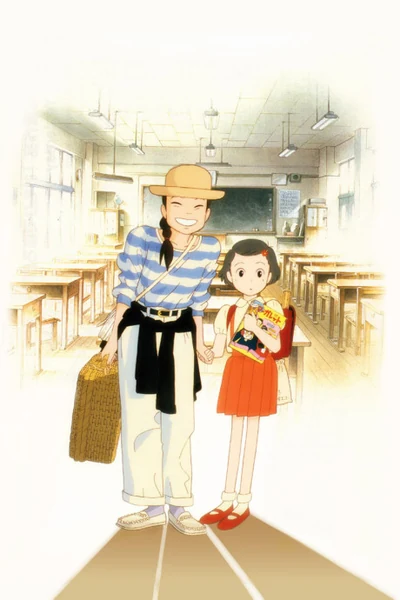
Overview
Only Yesterday is Isao Takahata's quietly radical adult drama about memory, work and the inconvenient persistence of childhood. Taeko, a twenty-seven-year-old office worker from Tokyo, travels to the countryside for a farming holiday and finds herself revisiting memories of her schoolgirl self in the 1960s.
That may sound modest, because it is. The film contains no sky pirates, forest gods or flying witches. Its great adventure is remembering accurately enough to notice what your life has been trying to tell you. In animation, that remains quietly astonishing.
Why it matters
The film matters because it expands what Ghibli can mean. Takahata uses animation for adult recollection, not fantasy spectacle, letting past and present sit beside each other with observational delicacy. Childhood is not treated as a golden haze but as a collection of embarrassments, disappointments, small joys and family pressures that continue to shape the adult.
It also represents one of animation's finest treatments of ordinary life. The drama is not small because nothing happens. It is large because the things that happen are recognisable: growing up, making compromises, wondering whether one has mistaken routine for destiny.
What to expect
Expect a slow, reflective film. The childhood scenes have a sketchier, memory-soft visual quality, while the adult countryside material is more grounded. Takahata is not rushing. He is letting thought accumulate.
Some viewers may find it too quiet. Others will find it devastating in the particular way a half-remembered school incident can be devastating at two in the morning, which is frankly rude of memory.
Adaptations and versions
Only Yesterday is a Studio Ghibli theatrical feature directed by Isao Takahata, adapted from a manga by Hotaru Okamoto and Yuko Tone. International release history has varied, so final publication should verify current edition and availability details.
It stands alone and requires no wider Ghibli knowledge.
Where to start
Do not make it your first Ghibli if you are seeking spectacle. Do make it an early stop if you want to understand Takahata's adult, realist side.
Watch it when you have patience for memory, silence and emotional honesty without dramatic fireworks.
Verdict The SFcrowsnest take
Only Yesterday is gentle, precise and quietly profound. It proves animation can explore adult life without disguising it as fantasy. Sometimes the most haunting ghost is simply the child you used to be, still waiting in the margins.