
Kimba the White Lion (Jungle Emperor)
Tezuka's noble white lion cub, and the first colour TV anime series; a certain Disney film about a lion king bears an uncanny, much-debated resemblance.
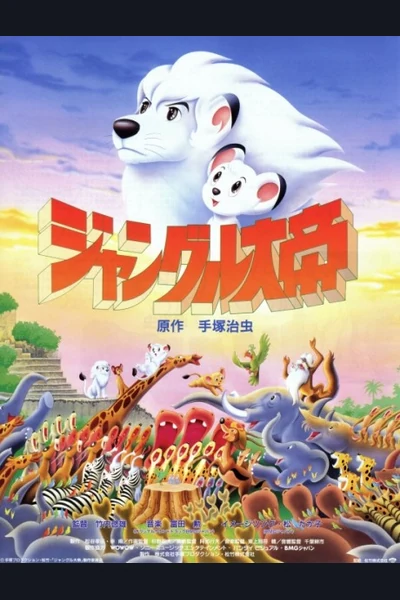
Kimba is a white lion cub born after human hunters kill his father and capture his mother. He returns to Africa determined to continue his father's ideal of peace while reconciling animals with selected benefits of human civilisation. The jungle has acquired an earnest young reformer and no obvious budget for implementation.
Osamu Tezuka's Jungle Emperor manga ran from 1950 to 1954. Mushi Production's 1965 adaptation became Japan's first full-colour animated television series, with the English-language Kimba the White Lion reaching international audiences soon afterwards. Later series and films reinterpret Kimba's life and Tezuka's ecological ideas.
Overview
Kimba learns human language and customs before returning to rule. Stories combine animal adventure, comedy and serious encounters with hunting, habitat and death. Tezuka's animals speak and organise societies, but the natural world is not sentimental. Predation remains an awkward policy matter when the king would prefer everybody to share lunch without discussing its ingredients.
The series reflects its era's attitudes towards Africa and can rely on simplified geography or stereotypes. Historical importance does not place those elements beyond criticism.
Why it matters
The colour anime was an industrial milestone and an early global ambassador for Japanese television animation. Its bright designs conceal a story comfortable with loss and moral conflict, characteristic of Tezuka's refusal to equate young audiences with emotional insulation.
Comparisons with Disney's The Lion King have generated decades of controversy. Similar images and plot elements have been documented and debated; Disney representatives denied direct influence, while the question of access and intention remains disputed. It is safer to describe the resemblance and history than declare a court verdict nobody obtained.
What to expect
Expect animal adventure, musical or comic material depending on the version, and themes of conservation and coexistence. Death and hunting occur. Older localisation and representation may require discussion with children.
The English version changes names and presentation. Kimba's Japanese name is Leo, which has done nothing to reduce later lion-name arguments.
Adaptations and versions
The 1965 colour series is the historically central anime. A sequel followed in 1966, with later television remakes and films offering different tones and endings. Tezuka's manga is darker and broader than the familiar children's dub.
Editions can be difficult to source consistently in Britain. Verify episode counts and whether a release is dubbed, subtitled or incomplete.
Where to start
Sample the 1965 series for its place in animation history, then seek a translated manga edition for Tezuka's original scope. Families should preview older episodes for representation and death.
Verdict The SFcrowsnest take
Kimba is more than a footnote to a Disney dispute. He belongs to Tezuka's lifelong argument about life, technology and the responsibilities of the powerful. The solutions are sometimes naive; the questions are not.
Historically essential and emotionally bolder than its bright surface suggests. Approach with context, and allow the white lion to occupy his own story rather than somebody else's comparison chart.