
Astro Boy (Tetsuwan Atom)
The atomic-powered robot boy who effectively launched television anime in 1963; Tezuka's pint-sized pacifist hero remains the medium's founding saint.
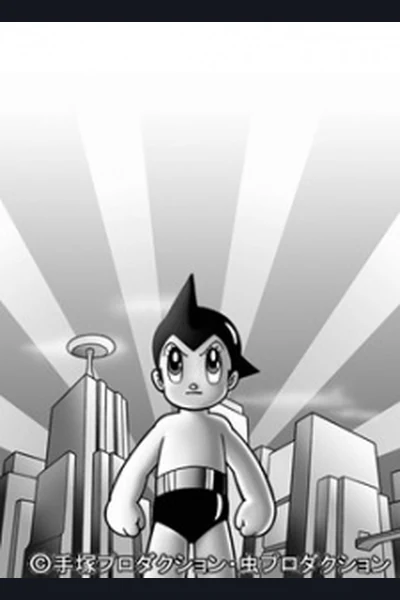
Dr Tenma builds a robot duplicate of his dead son Tobio, then rejects him for failing to grow like a human child. Professor Ochanomizu adopts the robot, who becomes Atom in Japan and Astro Boy abroad: a child-shaped machine with extraordinary strength, jet-powered feet and a recurring obligation to demonstrate greater humanity than his manufacturers.
Osamu Tezuka's manga began in 1952. Mushi Production's black-and-white television adaptation started in 1963 and became the first Japanese half-hour animated series broadcast weekly on a large scale, helping establish the industrial model recognised as television anime. Colour series followed in 1980 and 2003, alongside films and reinterpretations.
Overview
Astro protects humans and robots in stories ranging from simple adventure to melancholy arguments about prejudice. He is powerful but legally and socially vulnerable. Adults build robots as workers or weapons, then become alarmed when those machines display agency.
Tezuka's world is optimistic about science and suspicious of the people funding it. Robots can improve life, but human grief, militarism and hierarchy repeatedly corrupt their use. Astro's pacifism is therefore active rather than decorative.
Why it matters
The 1963 anime exported successfully and gave international audiences an early image of Japanese television animation. Its limited-animation methods were partly economic necessity, but Tezuka used strong poses, editing and expressive design to keep stories moving.
Astro became a national cultural figure and a foundation for later robot and AI fiction. The design is adorable; the premise begins with bereavement, rejection and an artificial child seeking moral recognition. Tezuka rarely assumed young readers required small ideas.
What to expect
Expect retro science fiction, robot battles, comedy and moral fables. Older work includes stereotypes and attitudes requiring historical context. Violence is generally suitable for children but death, war and discrimination occur.
The episodic stories vary greatly in tone and continuity. Scientific details are charmingly optimistic. Jet propulsion has been installed in the feet because practical trousers were apparently somebody else's department.
Adaptations and versions
The manga is extensive and was revised by Tezuka across publication. English collections vary in selection and order. The 1963 series is historically essential; the 1980 version offers colour and a somewhat darker continuity; the 2003 anime provides modern animation and another interpretation.
The 2009 computer-animated film is a loose international adaptation. Naoki Urasawa's Pluto reimagines one famous Astro Boy storyline as an adult murder mystery and should be read after knowing the original context.
Where to start
Try a curated Tezuka manga collection or selected 1963 episodes for history. The 1980 or 2003 anime is easier for younger modern viewers. There is no need to consume every version in order; Astro has been rebuilt often enough already.
Verdict The SFcrowsnest take
Astro Boy is foundational not because everything later copied him, but because Tezuka demonstrated how television anime could carry action, humour and ethical science fiction into ordinary homes.
The machinery has dated; the questions have not. What obligations do creators owe artificial life, and why does the robot child understand compassion before the adults? Astro remains small, cheerful and inconveniently difficult for humanity to deserve.