
Marine Boy
An undersea James Bond in trunks, chewing oxy-gum and pootling about with a dolphin; one of the first colour anime British children ever caught on the BBC.
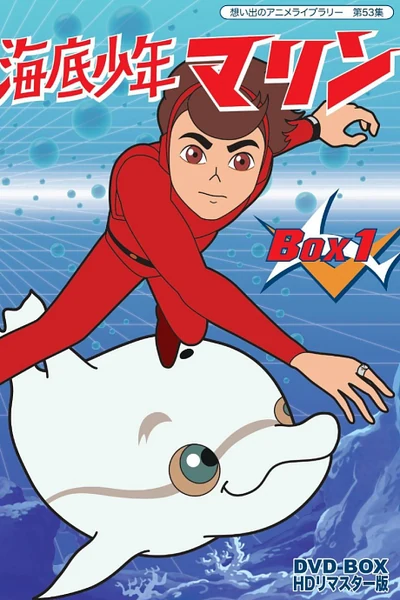
Marine Boy patrols the oceans using a hydro-jet suit, electric boomerang and oxy-gum that allows him to breathe underwater. He is assisted by the dolphin Splasher and mermaid Neptina, while the adult Ocean Patrol appears content to let a child handle international undersea emergencies provided he continues chewing.
The series known internationally as Marine Boy developed from earlier Japanese colour productions before its late-1960s syndicated form reached the United States, Britain and other markets. For many British viewers it was an early encounter with Japanese television animation, even if nobody had supplied the word anime yet.
Overview
Marine investigates submarines, sea monsters, criminal bases and futuristic threats beneath the waves. Professor Fumble supplies technology, while Splasher provides transport, rescue and the general impression that the dolphin has read the mission plan more carefully than several humans.
The setting reflects 1960s fascination with ocean exploration. Undersea cities, advanced vehicles and international patrols imagine the sea as a new frontier just as space programmes looked upward.
Why it matters
Marine Boy belongs to the first wave of colour anime exported widely to English-language television. Its influence is less about later imitation than memory: theme tune, white suit, boomerang and oxy-gum remained lodged in viewers who had no broader framework for the programme's origin.
The technology is cheerfully direct. A problem has a gadget; the gadget has a memorable name; safety certification is postponed until after the sea base stops exploding.
What to expect
Expect children's adventure, spies, peril, sea creatures and limited 1960s television animation. Violence is mild, though villains use weapons and accidents threaten the cast. Gender roles and cultural representation reflect the period.
English-language episodes were prepared for international syndication, so credits, dialogue and ordering may differ from Japanese material. Archival information can be inconsistent; final publication facts deserve checking against the specific release used.
Adaptations and versions
Earlier related Japanese series preceded the 78-episode international package, which was selected and dubbed for overseas markets. Home-video collections vary in completeness and restoration.
This is a compact historical property rather than a sprawling modern franchise. The dolphin has not acquired six cinematic timelines, an admirable display of restraint.
Where to start
Sample restored English-dubbed episodes if nostalgia or British broadcast history is the interest. Japanese-language availability is rarer. A few episodes convey the formula; completism is optional unless oxy-gum has already entered the bloodstream.
Verdict The SFcrowsnest take
Marine Boy is bright, brisk and technologically optimistic, a submerged cousin to the era's space adventures. It has dated, but its design remains instantly friendly and its place in early exported anime deserves recognition.
Best approached as television archaeology with a catchy theme. Splasher is reliable, the sea is full of criminals and nobody has yet explained the long-term dental effects of oxygenated chewing gum.