
Kaiju No. 8
A bloke whose job is mopping up after giant-monster attacks accidentally becomes one; funnier and a touch sadder than it has any right to be.
Kafka Hibino once promised his childhood friend Mina Ashiro that they would fight kaiju together. Mina grew up to command a celebrated Defence Force unit. Kafka, now thirty-two, works for a contractor that clears giant-monster intestines from public roads after the heroes have finished posing. Dreams do not always die dramatically. Sometimes they put on protective overalls and ask whether the spleen belongs in hazardous waste.
Then a small flying creature enters Kafka's mouth and transforms him into a humanoid kaiju of extraordinary strength. The Defence Force names this unidentified threat Kaiju No. 8. Kafka, still hoping to pass its entrance examination, must therefore join the organisation responsible for hunting him. Career changes are rarely tidy, but most involve less artillery.
Naoya Matsumoto's manga began on Shueisha's Shonen Jump+ platform in 2020. Production I.G's anime adaptation began in 2024, with Studio Khara contributing kaiju design and supervision. The combination is appropriate: one studio knows muscular action and the other has spent decades considering what enormous creatures do to cities and human composure.
Overview
Japan in Kaiju No. 8 experiences monster attacks as a recurrent civic emergency. The Defence Force uses specialised suits made from kaiju material, weapons derived from powerful specimens and a military ranking system that converts compatibility into combat output. It is Godzilla filtered through recruitment tests, workplace procedure and battle manga.
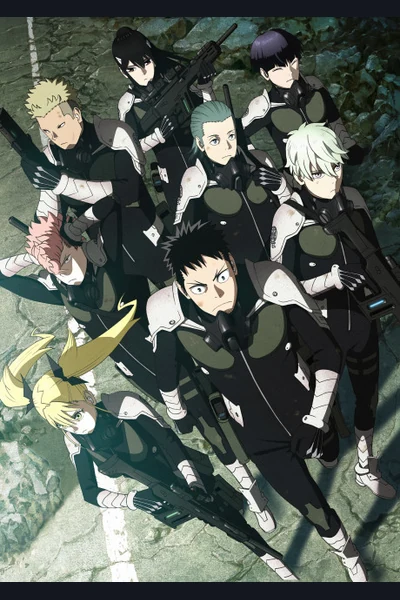
Kafka joins a younger cohort alongside Reno Ichikawa, a capable colleague who discovers his secret, and Kikoru Shinomiya, a prodigy carrying both excellent weapons and a ruinous burden of expectation. Mina remains the distant goal: not a romantic prize so much as the person beside whom Kafka promised to stand before adulthood redirected him to the drainage team.
The older protagonist is the first useful variation. Kafka is not ancient, despite the younger recruits occasionally behaving as if he remembers the invention of colour. He is simply old enough to have failed, compromised and acquired back pain. His second attempt therefore carries an adult mixture of hope and embarrassment absent from the usual teenage destiny package.
Why it matters
The series understands the labour beneath spectacle. Somebody must collect the pieces after a kaiju falls, identify useful organs and reopen the road. Kafka's cleanup experience gives him practical knowledge that heroic institutions initially overlook. The joke is obvious, but the point is sound: expertise acquired in an unfashionable job remains expertise.
Matsumoto builds a clean, accessible action series around that idea. The creatures are varied, the military technology readable and the cast immediately distinct. Kafka's secret creates tension without making him permanently solemn. He remains generous, excitable and capable of looking ridiculous in a combat suit, qualities that prevent overwhelming power from converting him into another dark-haired silhouette with expensive lighting.
The manga's long battles can stretch the premise thin, and some readers may wish the workplace and cleanup material remained more prominent once military escalation takes over. Even so, the central question retains force: can a person become the thing society fears without surrendering the person he was?
What to expect
Expect monster violence, military action, body transformation and large quantities of fictional biological debris. The tone is lighter than the gore might suggest. Comedy comes from Kafka's age, his undignified transformation and team relationships, but deaths and public danger are treated seriously. Romance is minimal; loyalty, professional ambition and chosen comradeship occupy the useful space.
Production I.G gives the anime sturdy movement and clear action geography. The kaiju designs range from traditional civic nightmares to organisms that appear to have evolved specifically to upset merchandising departments. The series is easy for newcomers to follow and requires no knowledge of Japanese monster cinema, although that knowledge supplies extra seasoning.
Adaptations and versions
The manga is the source and has a brisk early rhythm, using digital page presentation effectively without depending upon it. The anime follows the main story while giving transformation and combat additional physicality. Its music and sound design make Kafka's kaiju form feel heavy rather than merely enlarged.
Current season and release information should be checked at publication. The principal order is simple: manga chapters from the beginning or anime in broadcast order. Side stories and games are optional; no sanitation certificate is required.
Where to start
Anime episode one provides the best demonstration of the premise because it spends time on Kafka's cleanup work before rearranging his anatomy. Manga volume one is equally approachable and moves faster. Do not skip the failed-career material to reach the transformation. The disappointment is what makes the second chance matter.
Verdict The SFcrowsnest take
Kaiju No. 8 offers the rare action hero who has already watched his first dream go stale. That modest alteration gives familiar monster-fighting machinery a likeable human engine. Kafka is powerful because of the creature inside him, but worth following because failure did not make him mean.
It is funny, energetic and refreshingly clear about the value of unglamorous work. Later escalation sometimes pushes the original charm behind a very large explosion, yet the series remains an inviting modern kaiju adventure. Recommended for anybody who has looked at a heroic profession and wondered who cleans the boots afterwards.