
Golden Kamuy
A war veteran and an Ainu girl hunt a fortune in stolen gold across snowbound Hokkaido; a singular brew of adventure, history, gore, and food-based comedy.
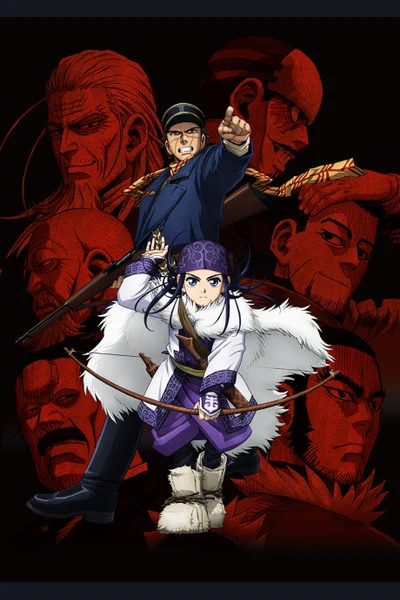
Saichi Sugimoto survived the Russo-Japanese War and acquired the nickname Immortal, which is useful but does not pay a widow's medical bills. A rumour of stolen Ainu gold sends him into Hokkaido's wilderness, where the map has been tattooed across a group of escaped prisoners. Nobody suggested treasure hunting required this much skin administration.
Overview
Satoru Noda's Golden Kamuy pairs Sugimoto with Asirpa, a young Ainu hunter whose knowledge repeatedly separates survival from an embarrassing frozen death. They pursue the gold while soldiers, former samurai, criminals and revolutionaries pursue it—and one another—with motives ranging from national ambition to private grief.
The plot is a western, war story, survival manual, historical caper and cooking programme sharing one increasingly crowded tent. It can move from trauma to slapstick to careful preparation of a squirrel without recognising any border between them.
Why it matters
The manga brought Ainu language, foodways and material culture to a vast popular audience, developed with consultation and extensive research. Asirpa is not a mystical guide placed beside the Japanese hero; she has her own family, politics, comic appetite and stake in what the stolen gold represents.
The story also examines the human wreckage left by modernisation and war. Its cast are survivors trying to build futures from an era that has used them hard. Even the flamboyant villains tend to arrive with coherent history beneath the lunacy.
What to expect
Expect graphic violence, animal hunting and preparation, battlefield memories, prison cruelty and more exposed male flesh than the average wilderness expedition has budgeted for. The comedy can become magnificently deranged. A serious discussion of identity may be followed by competitive miso appreciation; this is normal service.
Its cultural detail is a major strength, but the work remains historical fiction by a Japanese creator rather than a substitute for Ainu voices or scholarship. Treat it as an invitation to learn further, not a certificate declaring the subject completed.
Adaptations and versions
The completed manga is the source and the most comprehensive version. The television anime began at Geno Studio, with later production changing hands. It necessarily trims some cultural, culinary and character material to maintain the chase.
The early anime also achieved brief notoriety for a computer-generated bear that appeared to have wandered in from another production. The human drama survives the visitor.
Where to start
Choose the manga for Noda's detail, confident anatomy and precisely judged tonal collisions. The anime is a lively alternative if performance and momentum matter more, but readers who enjoy it should still investigate the omitted chapters.
Verdict The SFcrowsnest take
Golden Kamuy should not work: its ingredients appear selected by a committee that met during a gas leak. Instead, the result is erudite, humane and outrageously entertaining. It respects history without embalming its characters inside it, and understands that survival depends upon culture as much as ammunition. Also, never argue with Asirpa about dinner.