Yu-Gi-Oh!
A timid boy solves an ancient puzzle and gains a gambling alter-ego; spawned a trading-card game that has, frankly, funded entire economies.
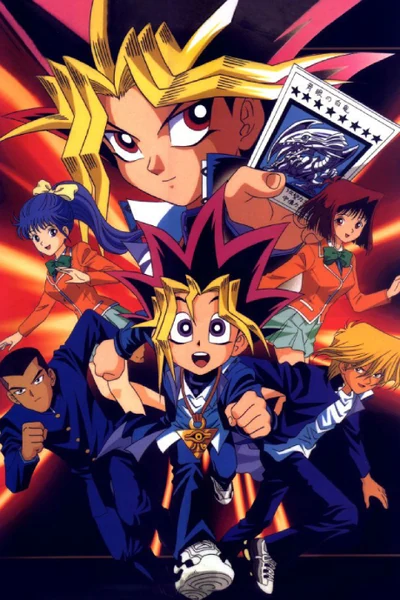
Timid schoolboy Yugi Mutou completes the Millennium Puzzle and awakens another personality: a confident ancient spirit who challenges bullies and criminals to Shadow Games with supernatural penalties. The early manga uses cards, dice and improvised contests. Then Duel Monsters arrives, discovers it can support an international paper economy and politely takes over the building.
Kazuki Takahashi's manga ran in Shueisha's Weekly Shonen Jump from 1996 to 2004 and filled 38 volumes. A short Toei anime appeared in 1998; Studio Gallop's Yu-Gi-Oh! Duel Monsters began in 2000 and became the version tied to the global trading-card game.
Overview
Yugi and friends Joey, Téa and Tristan become entangled with billionaire game designer Seto Kaiba, ancient Egyptian memory and tournaments in which holographic monsters acquire city-level infrastructure. Kaiba regards every setback as evidence he needs a larger aircraft.
The spirit in the Puzzle, usually called Yami Yugi or Atem, gradually becomes a person rather than Yugi's convenient confidence setting. Their shared body anchors a story about friendship, memory and learning when the game must end.
Why it matters
The trading-card game is one of the world's most successful, turning Takahashi's fictional rules into competitive play, collecting and schoolyard negotiations of variable legality. The anime's solemn presentation makes drawing a card feel like constitutional history.
Takahashi died in 2022 after entering the sea during an attempted rescue. His generosity of action adds a sombre real-world coda to a career built around friendship and games.
What to expect
Expect supernatural threat, tournament battles, friendship speeches and increasingly elaborate card interactions. The manga begins darker than the familiar anime. Rules differ between early fiction and the actual game, sometimes because dramatic necessity has activated a trap card.
Adaptations and versions
The 1998 Toei series adapts early non-card material and is informally called “Season Zero”. Duel Monsters covers the principal card era. The 4Kids English dub edits violence, changes dialogue and invents the “Shadow Realm” to avoid direct references to death.
Later anime—GX, 5D's, Zexal, Arc-V, VRAINS, Sevens and Go Rush!!—feature new casts and game mechanics. They are franchise branches, not prerequisites.
Where to start
Read the manga from volume one for Takahashi's full evolution, or watch Duel Monsters for the cultural phenomenon. Choose an uncut subtitled version if accuracy matters; choose the dub if childhood memory demands everybody explain friendship with unusual confidence.
Verdict The SFcrowsnest take
Yu-Gi-Oh! began as a strange, inventive manga about dangerous games and became a card empire whose rules now require their own judiciary. Beneath the commerce sits a sincere friendship between a frightened boy and the spirit who teaches him courage.
The manga is the strongest story; the anime is the louder monument. Both confirm that ancient Egyptian destiny can be settled by drawing the correct rectangle at the correct moment.