
Gigantor (Tetsujin 28-go)
A remote-controlled giant robot piloted by a boy in shorts; the granddaddy of the mecha genre, arriving before anyone had thought to climb inside the thing.
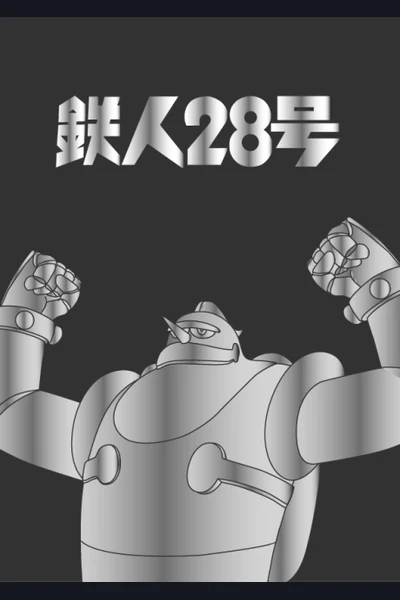
Tetsujin 28 is a giant robot controlled by a handheld remote. Young detective Shotaro Kaneda directs it against criminals and enemy machines, provided nobody steals the controller and turns the engineering triumph towards less civic objectives. The first great mecha question was not “who is inside?” but “who has the box with the buttons?”
Mitsuteru Yokoyama's manga began in 1956, drawing upon memories of wartime superweapons and post-war technological anxiety. A television anime followed in 1963. The American version, retitled Gigantor, changed names and dialogue but preserved the sight of a boy in shorts commanding enough metal to alter municipal boundaries.
Overview
Tetsujin was developed as a wartime weapon and later becomes an instrument of justice. Because it possesses no independent morality, control determines purpose. The same machine can rescue a city or crush it, a simple premise with rather more political usefulness than many later sentient robots receive.
Shotaro operates as detective and hero in a world of spies, gangsters and rival machines. Adult authorities accept his involvement with the ease typical of 1950s children's adventure, when risk assessments were printed on dissolving paper.
Why it matters
Tetsujin 28-go established the giant robot as a central manga and anime image before piloted machines became standard. Its remote-control model shaped later works and gave Japan a post-war story about redirecting military technology.
Yokoyama's clean designs and serial adventure influenced generations of creators. The robot is less character than contested power, making every stolen controller a miniature coup.
What to expect
Expect vintage crime adventure, robot battles and Cold War atmosphere. The animation is limited and the English dub firmly of its era. Violence is mild by modern standards, though the wartime origin adds weight beneath the children's action.
Localised Gigantor episodes may differ in order, terminology and tone from Tetsujin 28-go. Historical context improves the experience considerably.
Adaptations and versions
Later anime versions appeared in 1980 and 2004, with Tetsujin 28-go FX offering a sequel generation. The 2004 series, directed by Yasuhiro Imagawa, returns strongly to post-war themes and is a useful modern interpretation.
Live-action adaptations and a film also exist. Availability in English is uneven, so confirm editions rather than trusting a familiar robot on the cover.
Where to start
Sample the 1963 series or American Gigantor for historical flavour. Choose the 2004 anime for a more reflective modern production. Manga availability may require specialist editions or libraries.
Verdict The SFcrowsnest take
Gigantor is charmingly simple on the surface and historically loaded underneath. A weapon has no conscience; responsibility sits with the hand on the controller. Subsequent mecha placed children inside the machine, perhaps because leaving them outside had not reduced the danger.
Essential context for giant-robot history, best approached with tolerance for vintage production and localisation. It remains difficult not to admire a machine whose user interface can apparently topple a government.