
City Hunter
A sleazy but lethal sweeper-for-hire in Tokyo, forever clobbered by his partner's enormous hammer; slick 80s action-comedy that became utterly enormous in France.
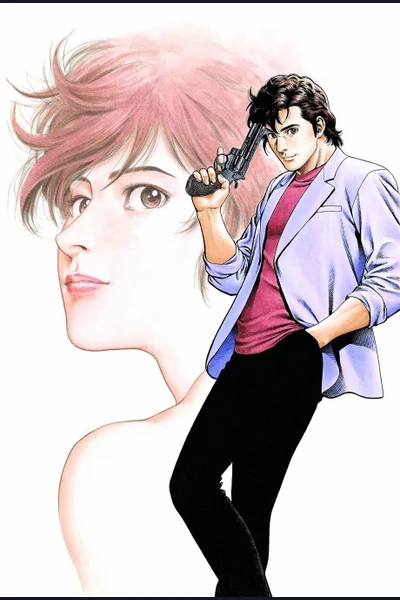
Ryo Saeba is a “sweeper” working in Tokyo as bodyguard, detective and hired gun. He is an extraordinary marksman, a survivor of a violent past and a relentless sexual harasser. His partner Kaori Makimura responds to the final quality with an enormous hammer that exists in comic space and would otherwise require planning consent.
Tsukasa Hojo's manga ran in Shueisha's Weekly Shonen Jump from 1985 to 1991 and filled 35 volumes. Sunrise's television anime began in 1987, followed by sequels, specials and films. The property became especially popular in France, where Ryo is known as Nicky Larson and localisation developed a cultural life of its own.
Overview
Clients leave messages for City Hunter at Shinjuku Station. Ryo accepts cases, particularly when an attractive woman is involved, while Kaori handles logistics and prevents him becoming the principal threat. Beneath the gag is a formidable partnership built from grief, trust and feelings neither wishes to place on an invoice.
Cases combine criminal syndicates, assassins and vulnerable clients with comedy. Hojo's clean art gives Tokyo glamour and Ryo physical credibility. When the jokes stop, the action can become genuinely tense.
Why it matters
City Hunter helped define 1980s urban action manga: fashionable streets, firearms, sports cars and adult melancholy inside a weekly boys' comic. Ryo's switch from fool to professional remains the character's central pleasure.
His behaviour towards women is also the central obstacle. The series treats harassment as a running joke far beyond what modern viewers should be asked to excuse. Kaori's hammer expresses comic disapproval without changing the pattern. Charisma is not retrospective consent.
What to expect
Expect gun violence, organised crime, sexual jokes, attempted assault and romance stretched across the run. The anime's music and period Tokyo atmosphere are excellent. Gender politics range from dated to unacceptable, while women can still receive agency within individual cases.
Adaptations and versions
The television anime covers a broad selection of manga cases across several series. Later animated films including Shinjuku Private Eyes and Angel Dust return to the classic cast.
Live-action versions include Jackie Chan's loose 1993 film, the affectionate French comedy Nicky Larson et le Parfum de Cupidon and a Japanese Netflix adaptation. Angel Heart is an alternate-universe successor, not a straightforward continuation.
Where to start
Try early manga volumes or selected first-series anime cases, then sample a later serious episode to see the range. Viewers unable to tolerate the harassment gag should leave without guilt; the hammer has not solved it in forty years.
Verdict The SFcrowsnest take
City Hunter is slick action comedy with a first-rate partnership and a lead whose worst joke keeps reporting for duty. The shooting, atmosphere and emotional turns remain strong; the sexual behaviour has aged like evidence.
Recommended with a substantial caveat. Kaori deserves half the title and control of the hammer budget.