
Bleach
Sulky teenager inherits soul-reaper duties and an enormous sword; peak mid-2000s cool, finally granted the lavish final-arc adaptation it was owed.
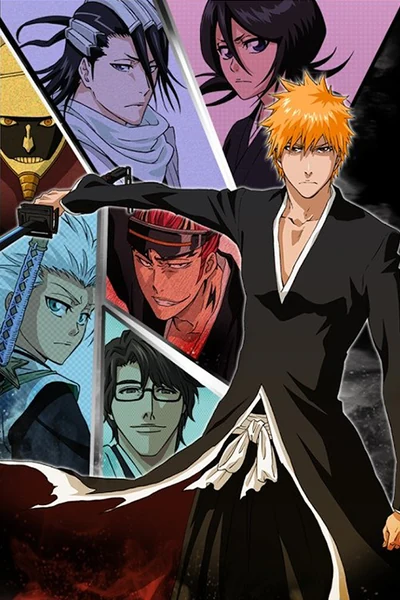
Ichigo Kurosaki is a scowling teenager who can see ghosts and has hair apparently selected by an anime casting department. When Soul Reaper Rukia Kuchiki is injured fighting a Hollow, she transfers her powers to him. Ichigo acquires a black robe, an enormous sword and responsibility for escorting souls while protecting the living from monsters. His school timetable receives no sympathetic adjustment.
Tite Kubo's manga ran in Shueisha's Weekly Shonen Jump from 2001 to 2016 and filled 74 volumes. Studio Pierrot's first anime ran from 2004 to 2012; Bleach: Thousand-Year Blood War returned in 2022 to adapt the manga's final major arc with the sort of production finish that suggests somebody had spent the intervening decade polishing every blade.
Overview
The early story mixes urban supernatural cases with comedy as Ichigo's friends and family become entangled in the spirit world. It then opens into Soul Society, an afterlife bureaucracy organised into armed divisions, noble houses and enough concealed history to make immortality look administratively exhausting. Captains command distinctive Zanpakuto swords whose released forms express temperament, technique and Kubo's refusal to send anybody into battle without an entrance.
Ichigo is less interested in rank than rescue. He gains power because someone he values is threatened, then discovers that each new identity reveals another buried inheritance. Rukia, Orihime, Chad and Uryu give the human side texture, while the Soul Reaper captains rapidly become a second cast capable of supporting entire arcs and a dangerous quantity of merchandise.
Why it matters
Alongside Naruto and One Piece, Bleach formed the so-called Big Three of internationally dominant 2000s shonen manga. Kubo's particular contribution was style: white space, sharp silhouettes, immaculate clothing and characters who behave as though battle is partly an obligation to look composed beneath difficult lighting.
The series' best conflicts turn powers into personality. A sword release is not merely an upgrade but a statement about its owner. Kubo understands anticipation, withholding a reveal until the page itself seems to lean forward. He is less disciplined about population control. Later arcs introduce squads of fascinating opponents faster than the story can provide chairs.
Themes of identity run beneath the cool surfaces. Ichigo repeatedly discovers that the categories around him—human, Soul Reaper, Hollow and others—are less stable than institutions claim. The afterlife depends upon boundaries while its hero keeps crossing them with muddy boots.
What to expect
Expect sword fights, transformations, spiritual monsters, comic school interludes and long sequences of opponents revealing abilities in ascending order of inconvenience. Violence is frequent but usually stylised; later material becomes bloodier. Romance remains secondary, despite the internet having conducted several prolonged diplomatic incidents on the subject.
The original anime has superb music and voice work but includes substantial filler written while the manga remained in production. Some anime-original arcs are entertaining; others interrupt urgent canon events with the timing of a survey caller during surgery. A filler guide is useful.
Adaptations and versions
The manga is complete and offers Kubo's art without broadcast pacing. The original anime covers the story through the Fullbring material, interspersed with filler arcs and films. Thousand-Year Blood War continues from there and revises or expands some material with Kubo's involvement.
The films are optional side adventures. Begin with manga volume one or the 2004 anime, then move to Thousand-Year Blood War only after the earlier canon. Starting there for the animation is rather like attending the final disciplinary hearing without knowing who works in the building.
Where to start
The manga is the cleanest route. If watching, sample the opening Substitute Soul Reaper episodes and continue through Soul Society, the arc that demonstrates why the franchise endured. Use a reputable filler list thereafter and decide which diversions appeal rather than accepting the broadcast schedule as sacred scripture.
Verdict The SFcrowsnest take
Bleach is uneven, overpopulated and exceptionally good at making a new sword technique feel like a cultural appointment. Its heroes wear grief beneath tailored cool; its villains frequently possess better wardrobes than motives. When Kubo's visual control, character design and emotional restraint align, the result is magnificent.
The manga remains the strongest whole. The anime supplies music, movement and a lavish final return. Recommended for viewers who like supernatural bureaucracy, elegant combat and teenagers discovering that every answer about their ancestry contains a second, more heavily armed answer.