
Black Clover
A boy born without a scrap of magic in a world of mages compensates with sheer lung capacity; he shouts, a great deal, and you'll grow to adore him for it.
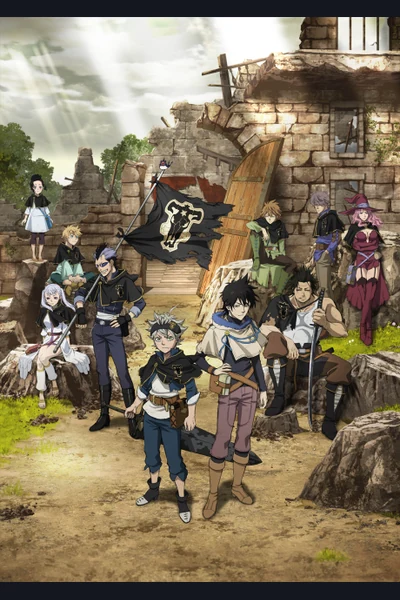
Asta is born without magic in the Clover Kingdom, where magic determines status, career and apparently whether one may enter a room without being judged by decorative nobility. His orphanage rival Yuno is a prodigy. Asta compensates by training his body, refusing despair and shouting at a volume suggesting anti-magic first manifested in the local noise regulations.
Yuki Tabata's manga began in Shueisha's Weekly Shonen Jump in 2015 before moving to the less frequent Jump GIGA. Studio Pierrot's television anime began in 2017, and the film Sword of the Wizard King supplied an original large-scale adventure. The premise is familiar; the series' appeal lies in how wholeheartedly it runs the machinery.
Overview
Asta receives a rare five-leaf grimoire containing anti-magic swords. He joins the Black Bulls, a squad of unruly Magic Knights led by Yami Sukehiro, whose management philosophy consists of exceeding limits and assigning dangerous tasks from the lavatory.
The Bulls are misfits with powers and personal damage that make respectable squads wary. Their gradual transformation into a family gives the series its heart. Yuno joins the elite Golden Dawn, preserving his rivalry with Asta without making either boy petty. They genuinely want the other to improve, a refreshing arrangement in a genre where friendship often requires several attempted murders.
Why it matters
Black Clover makes excellent use of teamwork. Asta's anti-magic is powerful but frequently depends upon allies positioning, protecting or propelling him. Supporting abilities combine creatively, allowing neglected characters to matter inside major fights rather than applaud from a safe hill.
The class structure gives those battles direction. Nobles assume magical strength proves social worth; peasants and outsiders expose the circular convenience of that belief. The critique remains within monarchy and knightly institutions, but the story is clear that talent is distributed more widely than opportunity.
Tabata's pacing is fast and his art particularly strong at demonic forms, sweeping spells and moments of impact. The story borrows openly from battle-shonen tradition yet distinguishes itself through generosity towards its ensemble and an almost medicinal lack of cynicism.
What to expect
Expect magic battles, transformations, demons, comedy and persistent declarations about surpassing limits. Violence is energetic rather than gruesome, though later material grows darker. Romance appears through several slow or comic attractions; comradeship and rivalry dominate.
Asta's early anime voice is famously loud. Many viewers adjust; some may wish to negotiate through double glazing. The anime improves as its production rhythm and cast settle, with major episodes receiving impressive animation despite the pressures of continuous broadcast.
Adaptations and versions
The manga is the cleanest and fastest version. The anime follows the main plot while adding recaps, expansions and original material. Its long weekly run produces uneven visuals but also gives the Black Bulls time to become a convincing household.
Sword of the Wizard King is an anime-original film best watched after substantial familiarity with the squad. Current continuation plans and manga release status should be checked at publication rather than inferred from promotional thunder.
Where to start
Begin with manga volume one if shouting is a concern. Anime viewers should give the cast several episodes to settle and continue into the first major dungeon material before judging the formula. Release order is sufficient; the grimoire does not contain a hidden viewing chart.
Verdict The SFcrowsnest take
Black Clover is built from recognisable parts and powered by conviction. Asta's refusal to surrender can be noisy, but it is never smug. The series believes effort matters, privilege should be challenged and the least respectable squad may be the one most capable of becoming a home.
The manga is brisk and handsome; the anime uneven but often rewarding. Recommended for viewers who miss large ensemble battle shonen played straight, with inventive teamwork and no embarrassment about hope. Ear protection remains an optional accessory.