
Akira
Neo-Tokyo, motorbikes and psychic body horror; the 1988 film that detonated anime's reputation in the West and still looks extraordinary.
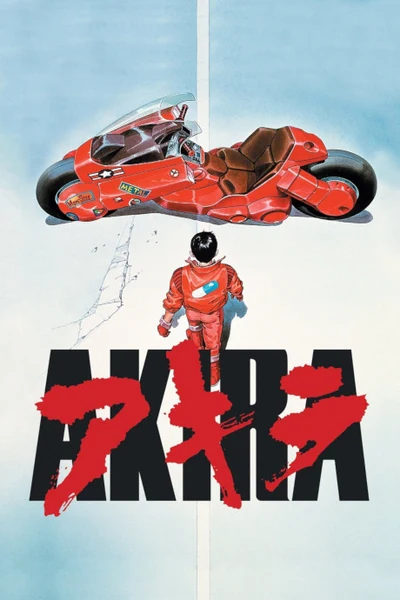
Neo-Tokyo rises from the crater left by an explosion that helped trigger World War III. By 2019 the rebuilt city has expressways, anti-government protests, military experiments and teenage biker gangs treating road safety as a rumour. When gang member Tetsuo Shima encounters an escaped psychic child, he develops powers that grow faster than his ability to control them. The city has already survived one impossible event and appears to have mislaid the lessons.
Katsuhiro Otomo's manga ran from 1982 to 1990 in Kodansha's Young Magazine. Otomo directed the 1988 animated film while the manga was still unfinished, condensing and transforming a vast serial into a two-hour work. Film and manga share characters, imagery and central conflict but are not interchangeable versions.
Overview
Kaneda leads the Capsules motorcycle gang and spends much of his energy performing confidence. Tetsuo is younger, resentful and tired of being protected. Psychic power turns that insecurity into an urban threat. The military, led by Colonel Shikishima, attempts containment while revolutionary groups and religious believers pursue their own interpretations of Akira, the absent force at the centre of the city's history.
The red motorcycle is famous, but Akira is not fundamentally about a motorcycle. It is about unstable power: personal, military, political and biological. Neo-Tokyo's institutions suppress evidence while young people inherit ruins they did not create.
Why it matters
The film became a landmark in international anime distribution. Its enormous production resources, detailed motion, night-time city and adult subject matter contradicted Western assumptions that animation meant inexpensive children's television. It did not introduce anime to the West single-handedly, but it detonated many viewers' existing definition.
Otomo's animation is still extraordinary. Vehicles have weight, crowds move independently and destruction unfolds as physical process rather than decorative flash. Geinoh Yamashirogumi's score combines percussion, voices and electronic sound into something ritualistic and futuristic at once.
The manga is broader and more political. It continues beyond the film's compressed catastrophe, giving factions, city geography and Akira himself far more room. Otomo's draughtsmanship makes architecture and rubble readable at a scale where lesser artists might submit smoke.
What to expect
Expect violence, drug use, political unrest, child experimentation and severe body horror. Tetsuo's transformation remains one of animation's great assaults upon anatomical confidence. Sexual violence is threatened in an early sequence. This is adult science fiction, despite the teenage protagonists and extensive toy motorcycles.
The characters can feel emotionally distant in the film because of compression. Kaneda's bravado and attachment to Tetsuo provide the spine, but the city itself is nearly the principal character: magnificent, corrupt and permanently five minutes from another crater.
Adaptations and versions
Watch the 1988 film as a complete work. Read the six large manga volumes from the beginning for the full narrative; do not start where the film appears to stop, because events and roles diverge substantially.
Multiple English dubs and subtitle editions exist, with differences in terminology and performance. Modern restorations are preferable, while the underlying animation should remain allowed to look like film rather than polished into synthetic cleanliness.
Where to start
Start with the film. It is immediate, visually overwhelming and historically central. Then read the manga to discover how much was left outside the cinema version. The experience is not repetition; it is watching a detonation and then studying the city that made it inevitable.
Verdict The SFcrowsnest take
Akira still looks like the future because Otomo understood that futures become convincing through infrastructure, politics and neglected young people, not merely neon signs. Its imagery has been copied endlessly, usually without acquiring the same structural anger.
The film is essential animation; the manga is the larger achievement. Together they form a cyberpunk monument to power escaping every institution that claimed to manage it. Mind the motorcycle. The rider is not the most dangerous thing approaching.