Daughter of the Empire
The Empire trilogy is routinely ranked among the finest political fantasy ever written — proof that the 'invaders' of Magician had the richer story, and a model for every court-intrigue fantasy since.

The essential authors of science fiction, fantasy & horror — and where to start reading them.
Book Entry · Fantasy
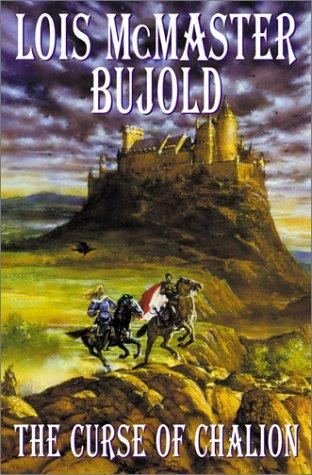
by Lois McMaster Bujold · 2001 · World of the Five Gods, book 1
Cazaril — courtier, soldier, galley slave, broken man — limps back to the household where he was once a page, asking only quiet work, and is appointed tutor to the royesse Iselle, whose family labours under a generations-old curse. Protecting her requires him to attempt death magic, which is to say prayer with a body count: in Bujold's Chalion the five gods are real, present and constrained, able to act only through souls open enough to let them — and sainthood, Cazaril discovers, feels less like glory than like being a door forced off its hinges. Court intrigue, theology and late-won love, in the genre's most grown-up key.
Hugo and World Fantasy finalist (its sequel Paladin of Souls swept Hugo and Nebula); the modern benchmark for theological fantasy and the favourite Bujold of a sizeable faction.
Bujold's theological fantasies of Chalion and beyond, where five gods work through cracked human vessels and sainthood is an occupational hazard.
In the Guide from World of the Five Gods:
Prefer Amazon? Buying through these links may earn SFcrowsnest a small commission, at no extra cost to you.
Buy on Amazon UK → Buy on Amazon US →As an Amazon Associate, SFcrowsnest earns from qualifying purchases.
The Empire trilogy is routinely ranked among the finest political fantasy ever written — proof that the 'invaders' of Magician had the richer story, and a model for every court-intrigue fantasy since.
The trilogy's later volumes took the World Fantasy Award (Madouc, 1990); its blend of folklore and statecraft visibly influenced Gaiman's Stardust and modern fairy-tale epic alike.
World Fantasy finalist and a permanent top-ten fixture in fantasy polls: the genre's defining novel of cultural erasure, taught and cited well beyond it, and the proof of concept for Kay's history-adjacent method.