American Gods
Winner of the Hugo, Nebula, Locus and Bram Stoker awards in one sweep — the codifying text of the gods-among-us genre — and a Starz television series besides.

The essential authors of science fiction, fantasy & horror — and where to start reading them.
Book Entry · Fantasy
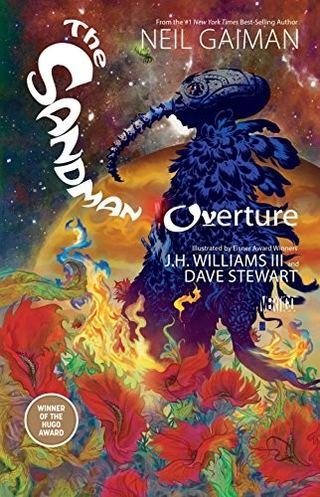
Captured in 1916 by an occultist fishing for Death, Dream of the Endless — Morpheus, lord of stories, pale and difficult — escapes seventy years later into a comics series that swallowed every mythology whole: Cain and Abel, Lucifer resigning Hell and handing Morpheus the key, Shakespeare's commissioned dreams, a serial-killers' convention, and Death herself as a sensible goth older sister. Across seventy-five issues (1989–96) Gaiman built a single tragedy — a king of stories learning, too slowly, that he is in one — and ended it on schedule, a thing comics simply did not do. The Dreaming has been continuously inhabited since.
The comic that won a World Fantasy Award ('A Midsummer Night's Dream', 1991) and made the medium's literary case for a generation; collected editions have never left print, and the 2022 Netflix series renewed the franchise.
Prefer Amazon? Buying through these links may earn SFcrowsnest a small commission, at no extra cost to you.
Buy on Amazon UK → Buy on Amazon US →As an Amazon Associate, SFcrowsnest earns from qualifying purchases.
Winner of the Hugo, Nebula, Locus and Bram Stoker awards in one sweep — the codifying text of the gods-among-us genre — and a Starz television series besides.
A cult masterpiece of mythic YA — the standard against which Tam Lin retellings are measured — and the Jones novel writers (Gaiman included) most often name when asked what the form can do.
The entry point of the saga that became Poland's great fantasy export: source material for CD Projekt Red's genre-defining games and Netflix's series, and the book that put Slavic folklore at fantasy's global table.