City
Winner of the International Fantasy Award (1953) and a cornerstone of pastoral SF; Jenkins is the genre's most touching robot this side of Asimov.

The essential authors of science fiction, fantasy & horror — and where to start reading them.
Book Entry · Science Fiction
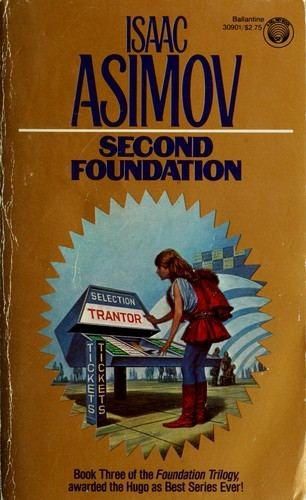
Mathematician Hari Seldon's new science of psychohistory predicts the Galactic Empire's fall and thirty thousand years of barbarism — unless a Foundation of encyclopaedists, planted on the rim-world Terminus, can compress the dark age to a single millennium. The linked stories (from 1940s Astounding) skip decades at a time as Terminus survives successive 'Seldon crises' through trade, religion-as-marketing and the iron rule that violence is the last refuge of the incompetent. History as chess problem, and compulsively readable seventy years on.
Cornerstone of the future-history tradition; Hugo for Best All-Time Series (1966). Inspired readers from Paul Krugman (economics) to Elon Musk, and an Apple TV+ adaptation from 2021.
The fall and engineered rebirth of a Galactic Empire, guided by Hari Seldon's predictive science of psychohistory. The genre's definitive future-history epic, Hugo-crowned Best All-Time Series in 1966.
In the Guide from Foundation series:
Prefer Amazon? Buying through these links may earn SFcrowsnest a small commission, at no extra cost to you.
Buy on Amazon UK → Buy on Amazon US →As an Amazon Associate, SFcrowsnest earns from qualifying purchases.
Winner of the International Fantasy Award (1953) and a cornerstone of pastoral SF; Jenkins is the genre's most touching robot this side of Asimov.
Co-winner of the first Nebula, Hugo winner, and the bestselling SF novel of all time.
The essential corrective that completes Dune's argument about charismatic leaders; its rehabilitation is now complete, and Villeneuve's third film takes it as source.