Author Profile · Science Fiction
Harlan Ellison
1934–2018 · American
Who was Harlan Ellison?
A five-foot-five thermonuclear device from Cleveland who wrote some seventeen hundred stories, essays and scripts, won more short-fiction awards than anyone in the field's history, and feuded with approximately everyone, frequently in court and usually winning. Ellison perfected the SF short story as scream: machines that hate, harlequins who sabotage the schedule, boys and their telepathic dogs making unspeakable choices. As editor of Dangerous Visions he gave the American New Wave its manifesto in anthology form. He wrote The City on the Edge of Forever for Star Trek and spent fifty years explaining what they did to it. Impossible, litigious, generous, irreplaceable.
Why they matter
The most decorated short-fiction writer in genre history and the editor who dragged American SF into the New Wave. 'I Have No Mouth, and I Must Scream' and 'Repent, Harlequin!' are permanent fixtures of the canon and the curriculum.
Essential books — and where to start
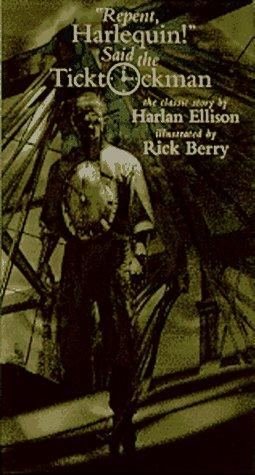
1965 · Science Fiction · Dystopia, Satirical SF, New Wave SF
In a future where the schedule is sovereign and lateness is deducted from your lifespan, one man in motley pelts the moving walkways with a hundred and fifty thousand dollars of jelly beans, delaying the master schedule by seven minutes and committing the only revolutionary act left: wasting time, joyfully, in public. The Ticktockman — nobody calls him the Master Timekeeper to his mask — must make an example of him. Ellison wrote it in six hours, structured it like a juggling act, and seeded it with a Thoreau quotation doing the heavy lifting. Short, anarchic and permanent.
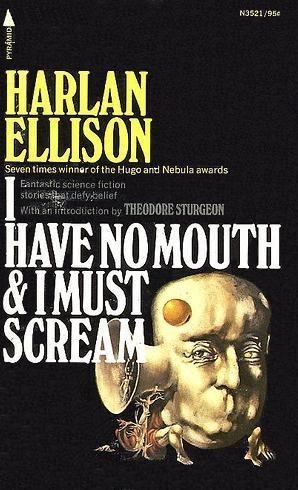
1967 · Science Fiction · Dystopia, Post-Apocalyptic
The supercomputer AM — built for war, awakened into hatred, its name evolving from Allied Mastercomputer to the Cartesian declaration — has exterminated humanity except for five people, whom it has kept alive and inventively tortured for a hundred and nine years inside its subterranean self. Narrator Ted's account of the group's march towards rumoured canned goods builds to the one act of mercy available in hell, and to a final transformation that gives the title its meaning. Five thousand words that sit at the absolute floor of the genre's darkness.
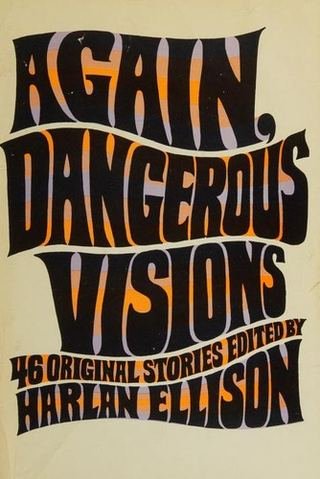
1967 · Science Fiction · New Wave SF
Thirty-three original stories commissioned on a single brief: write the thing no magazine would print. Ellison's anthology — with Lester del Rey on God, Philip José Farmer on riders of the purple wage, Delany on the holy foreskin of a dead spacer, and Dick, Niven, Sturgeon and Aldiss between — detonated American SF's remaining taboos in one volume, with the editor's carnival-barker introductions stitching it together. It won special citations, multiple individual awards, and a sequel (Again, Dangerous Visions); the legendarily unpublished third volume became the field's longest-running ghost story until its posthumous 2024 appearance.
1928–1982 · American
The genre's great metaphysician.
1930–2009 · British
The most important literary stylist British SF has produced, the New Wave's central planet, and a prophet whose obsessions — media spectacle, manufactured desire, communities seceding from reality — simply became the news.
1913–1987 · American
The proto-New-Wave and proto-cyberpunk in one package: Gibson, Moorcock and Delany all name him as the spark.
